


 (+86)-137 5851 1881



Content
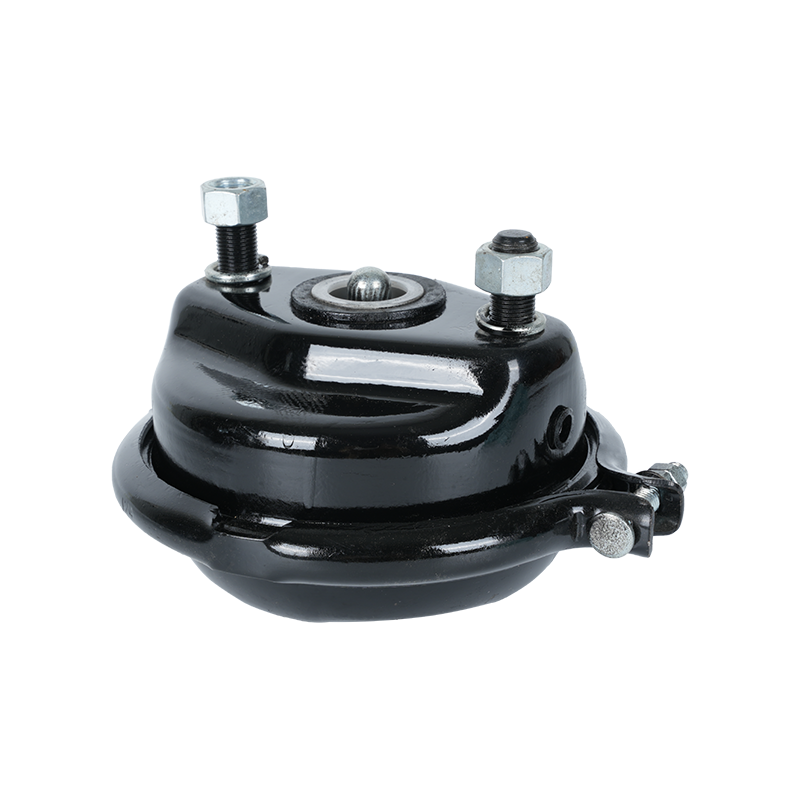
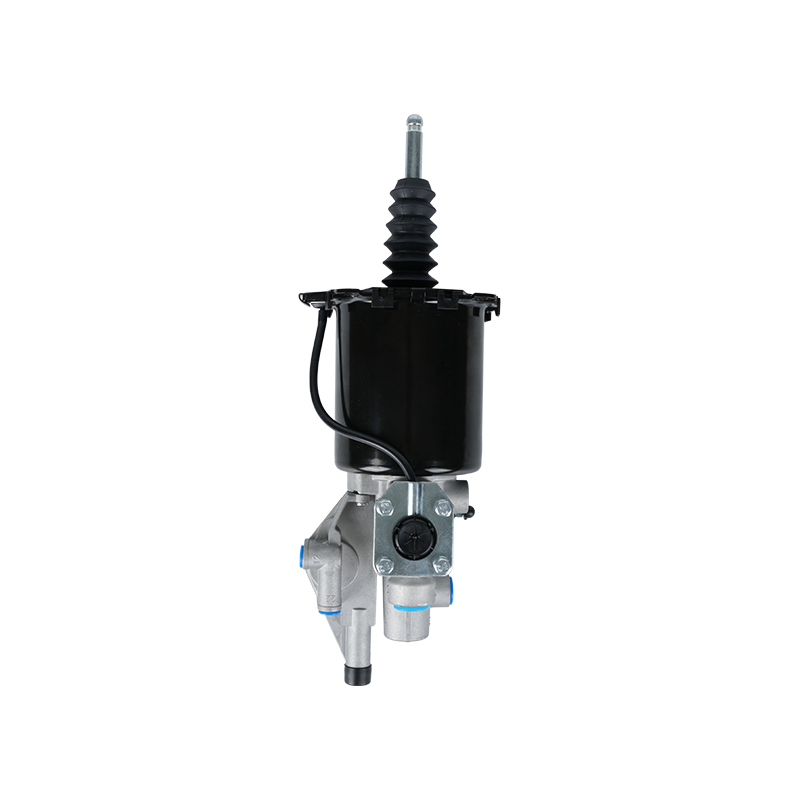
Compressed air does the pushing, and the hardware only redirects it. Press the treadle valve and metered air fills a brake chamber; the diaphragm flexes, the pushrod extends, and that straight-line push swings a slack adjuster, which rotates an S-cam. The cam's lobes lift the brake shoes outward until they press against the drum. Lift your foot and the air exhausts, the return springs pull the pushrod back, and the shoes retreat to a running clearance measured in thousandths of an inch. One application lasts a fraction of a second and repeats millions of times over a truck's working life.
Air is used instead of hydraulic fluid on heavy vehicles for three practical reasons. It can be generated continuously by an engine-driven compressor and stored in reservoirs, so braking does not depend on one sealed circuit. It travels easily from a tractor to several trailer axles through couplers a driver connects by hand. And it fails in a predictable direction: when pressure falls, spring brakes apply instead of releasing.
That is why the system is called fail-safe rather than simply powerful. What follows traces the air from compressor to drum, then looks at the numbers, the adjustment parts and the inspection habits that decide whether the brakes really work when a loaded truck needs them.
Every application follows the same route, and weakening any single stage shows up at the wheel as a longer stopping distance.
 Brake Chamber ManufacturersChanging a Brake Chamber: Size, Stroke, Safety, and Installation Guide 12 Oct, 2026 A service writer calls the shop with a familiar problem: a tractor with 18/24D disc...View Product →
Two parts on that list are replaced most often in service: the chamber that converts pressure into force, and the adjuster that keeps the stroke short.
100 to 120 psi is the working range of a truck air brake system - every hard stop an 80,000-pound combination makes is built inside that narrow band.
Each figure is a threshold, not a preference. A warning that stays silent at 60 psi, a build time of 90 seconds, or a stroke a quarter of an inch past the stamped limit all point to a specific part to inspect, and none of them can be judged by feel from the driver's seat.
Both designs keep the shoes close to the drum. They differ in who takes up the wear, and in what happens when that work is skipped.
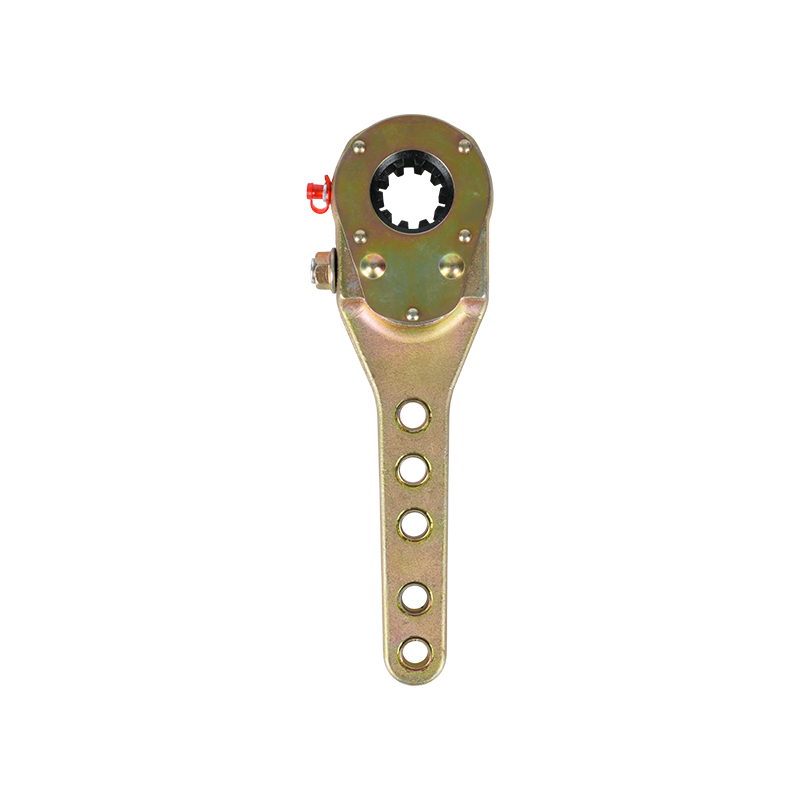
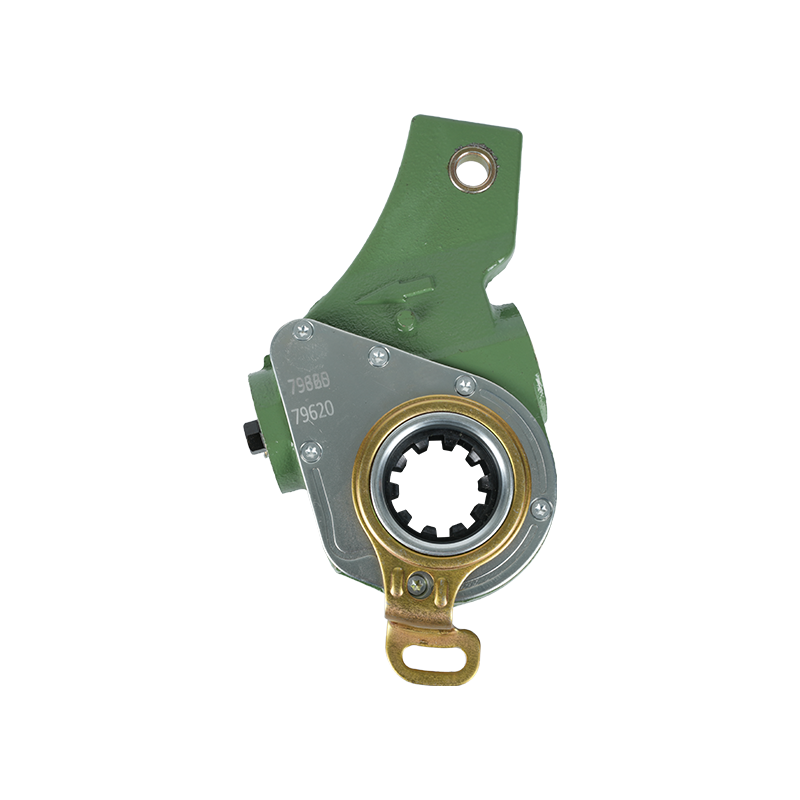
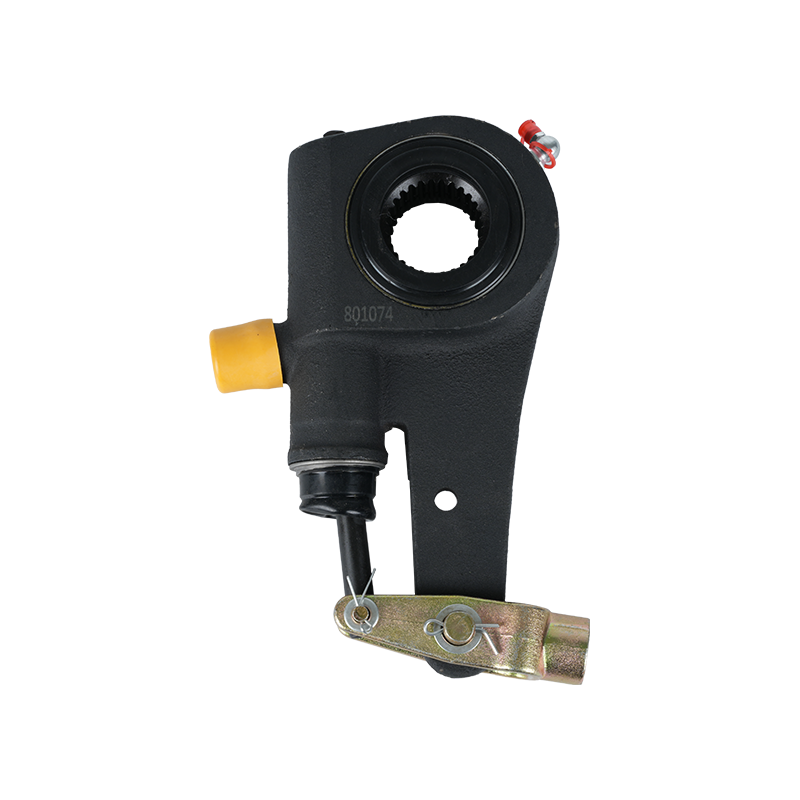
| Aspect | Manual slack adjuster | Automatic slack adjuster |
|---|---|---|
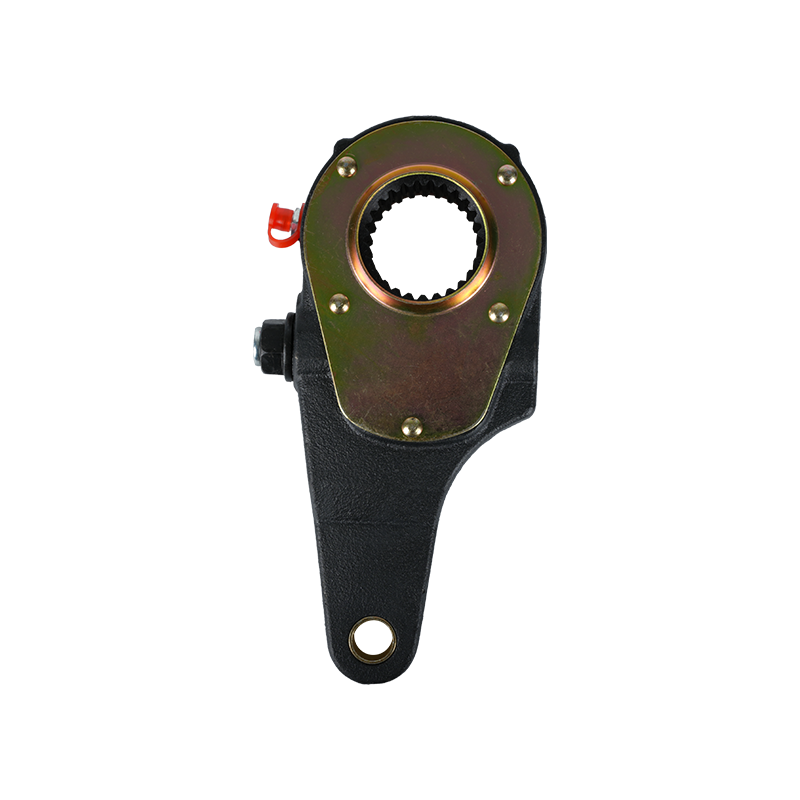
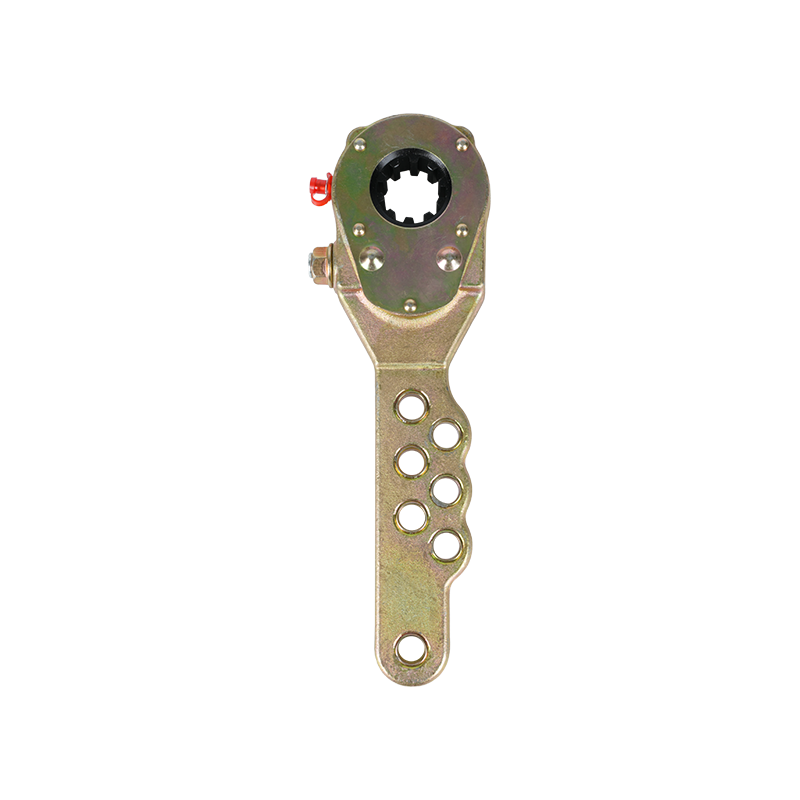
| How the gap closes | A technician turns the adjusting hex until the shoes touch the drum, then backs the adjuster off to set clearance. | An internal clutch or worm takes up wear on the return stroke of each brake application. |
| Who does the work | A person, on a fixed service schedule. | The unit itself, whenever the brakes are used. |
| Result of neglect | Stroke grows quietly until the chamber runs out of travel and braking force drops. | Worn bushings, a stretched return spring or a slipping clutch still produce a long stroke. |
| Most common mistake | Over-tightening, which drags the shoes and overheats the drum. | Manually shortening an automatic unit, which hides the mechanical fault behind it. |
| Typical fit | Older vehicles and fleets where adjustment is part of routine maintenance. | Long-haul trucks and trailers with long intervals between workshop visits. |
Both designs still depend on measuring pushrod stroke at inspection; an automatic adjuster removes labor, not the need for measurement.
 Automatic Slack Adjuster Manufacturers1. The design of the automatic slack adjuster fully considers the needs of users in the actual assembly process. By adopting advanced structures and mechanisms, the as...View Product →
With the system at 90 to 100 psi and the service brakes fully applied, each pushrod should extend no further than the limit stamped on its chamber. Released, the shoes should sit about 0.010 to 0.030 inch from the drum - close enough to bite immediately, far enough to avoid drag.
The chamber has a finite pushrod travel. Once the diaphragm reaches the end of that travel, extra air pressure adds almost nothing, and the S-cam passes its most effective angle. A pedal that still feels firm can therefore be delivering far less force at the wheel than the driver assumes.
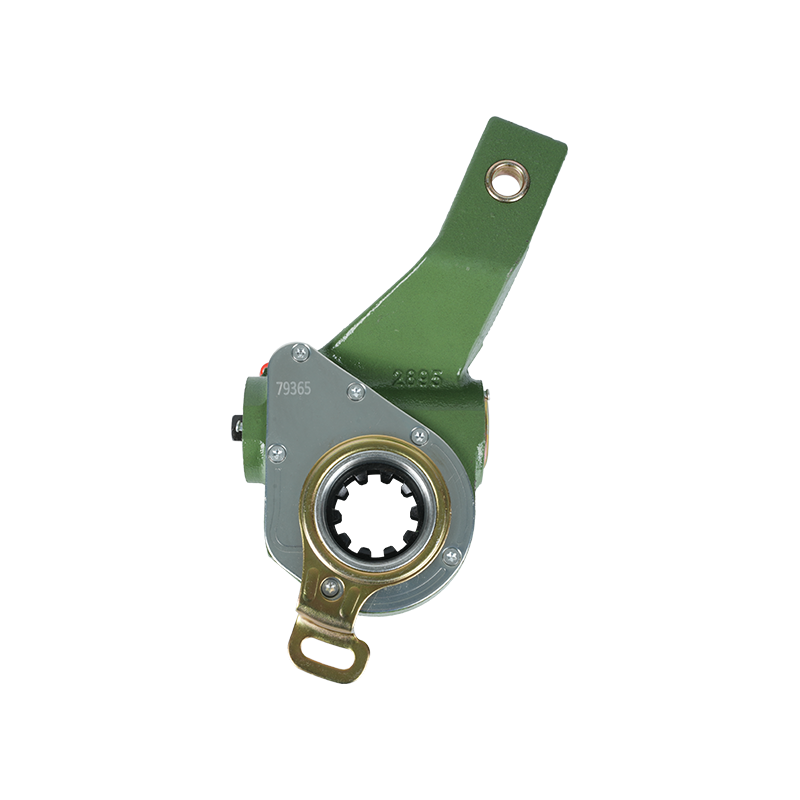
An automatic adjuster corrects clearance only on the return stroke, and only when the measured clearance exceeds its internal setting. If the stroke keeps growing between checks, the adjuster is rarely the root cause: worn S-cam bushings, stretched springs, a cracked chamber housing or a wrong installation all produce the same symptom. There is a closer look at how automatic adjustment behaves in heavy truck braking systems if you want the mechanism in more depth.
With the brakes released, pulling the adjuster arm toward the chamber should move it no more than about an inch. More than that means the slack is in the bushings, pins or rollers, and shortening the adjustment only disguises a worn foundation brake.
 Manual Slack Adjuster ManufacturersChanging a Brake Chamber: Size, Stroke, Safety, and Installation Guide 12 Oct, 2026 A service writer calls the shop with a familiar problem: a tractor with 18/24D disc...View Product →
Troubleshooting gets faster when you separate what the driver notices from what the hardware is actually doing.
| Symptom | Likely cause | First check |
|---|---|---|
| Stroke grows longer every week | Slipping automatic adjuster clutch, or worn foundation brake parts | Inspect S-cam bushings, rollers and return springs before replacing the adjuster. |
| Truck pulls to one side when braking | Uneven adjustment, a leaking chamber diaphragm, or oil on the linings | Compare pushrod stroke left and right at the same pressure, then look for contamination on the shoes. |
| Pressure drops overnight | Leak at a fitting, hose, valve or chamber diaphragm | With the engine off and the brakes applied, listen along the lines and apply soapy water to the joints. |
| Slow build from 85 to 100 psi | Restricted compressor inlet or a saturated air dryer | Time the build at fast idle and check the dryer purge and cartridge condition. |
| Compressor cycles more often than usual | System leakage or a governor cutting in too early | Record the cut-in and cut-out pressures, then repeat the static leak test. |
Measurements taken with a gauge and a ruler repeat; a pedal that feels fine does not.
A spring brake chamber contains a compressed spring holding enough energy to kill. Never loosen the clamp band on an assembled chamber, and always cage the spring before removing a chamber from the vehicle. Chock the wheels, and never trust air pressure alone to hold a parked truck.
Replacement parts matter as much as procedure. A chamber with a different effective area changes pushrod force at the same air pressure, which changes the stroke limit measured at inspection. Matching chamber type, stroke rating and adjuster length to the original specification keeps that calculation intact - the same cross-check applies when sourcing heavy-duty truck and trailer brake components such as chambers and slack adjusters.
Air brakes are simple in principle: store pressure, meter it, convert it into force at the wheel, and let the springs return everything to rest. Almost every failure found in a workshop traces back to one of those four steps being measured too late.



 English
 中文简体
 русский
 عربى
