


 (+86)-137 5851 1881
(+86)-137 5851 1881
(+86)-137 5851 1881



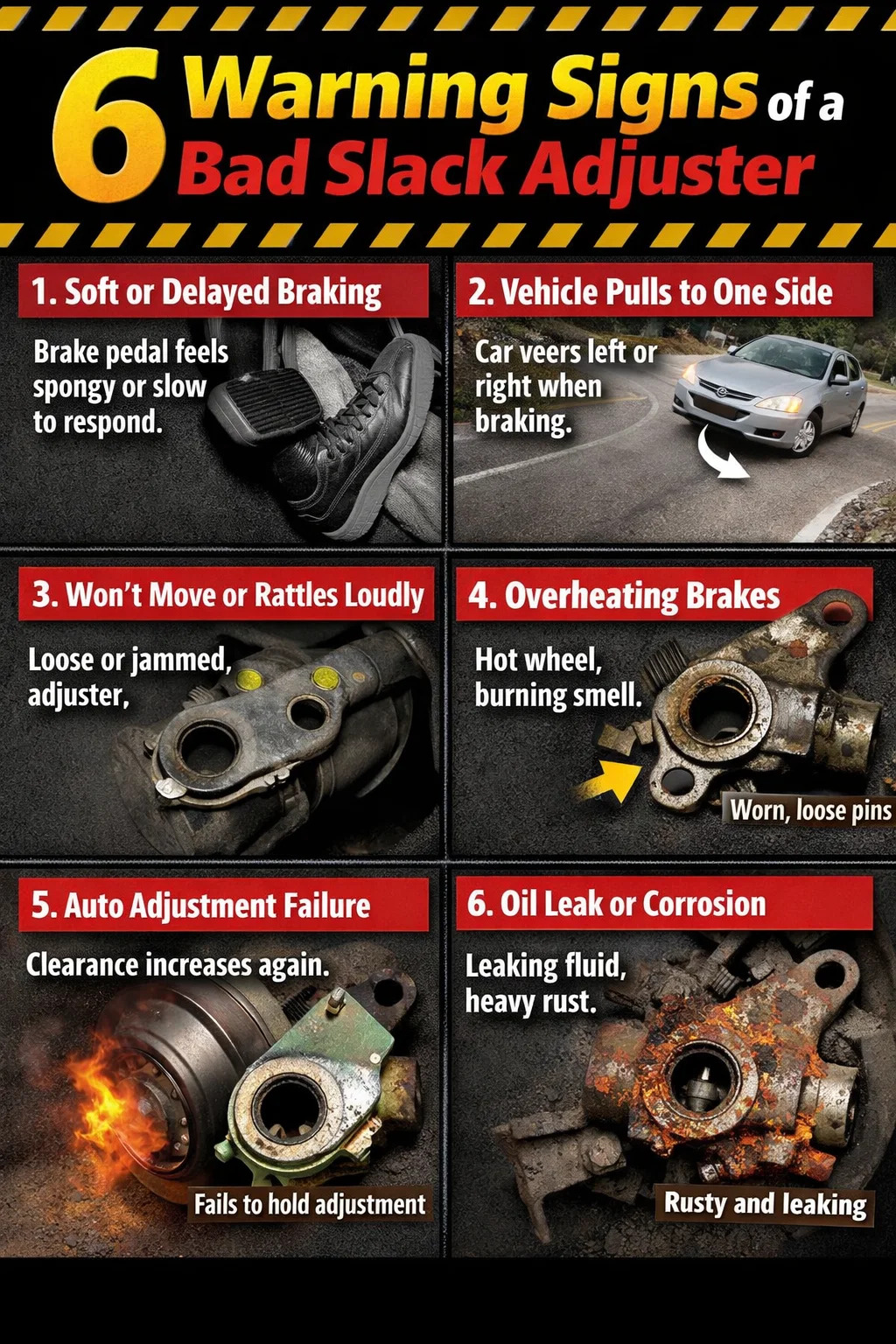
Determining whether a slack adjuster has "failed" doesn't require you to be a top-notch mechanic; you can often spot the signs through everyday driving sensations and simple visual inspection.
This is the most intuitive feeling.
When you press the brake pedal, if you feel you have to press much deeper than usual to get braking force, or if the car doesn't slow down immediately after pressing the pedal, but hesitates before reacting,
this is usually because the slack adjuster is not effectively compensating for brake pad wear, resulting in excessive clearance. The air chamber push rod has to travel a long distance before the brakes engage.
This is a very dangerous sign.
If you're driving straight on a flat road and the front of the car suddenly pulls sharply to the left or right when you brake, it indicates uneven braking force on the wheels.
It's likely that the slack adjuster on one side is stuck or its adjustment function has failed, resulting in uneven brake pad clearance and uneven force distribution between the left and right wheels.
You can crawl under the vehicle (remember to block the wheels and release the handbrake first) and try it yourself.
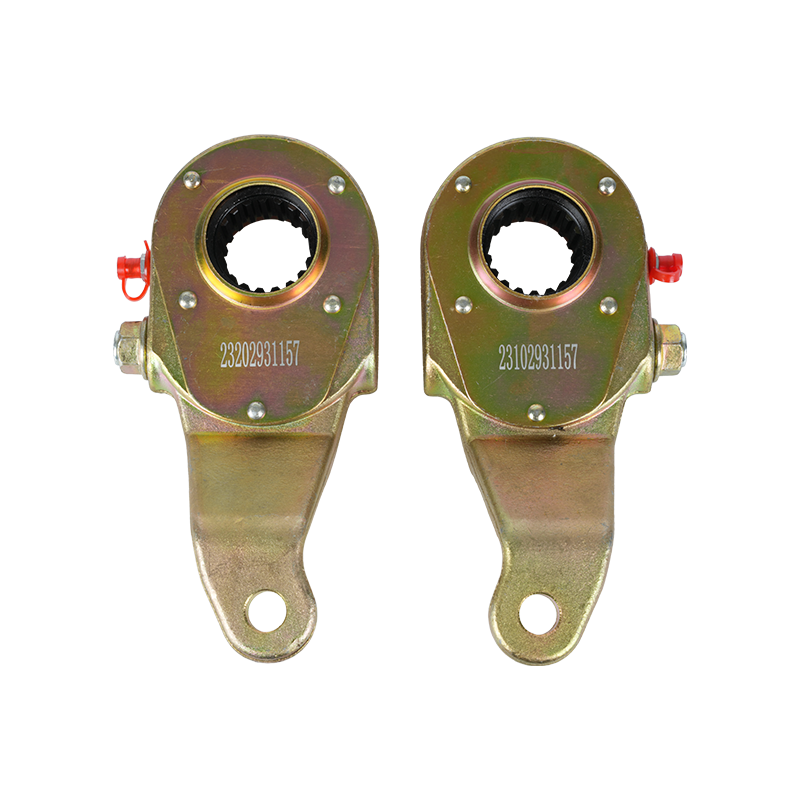
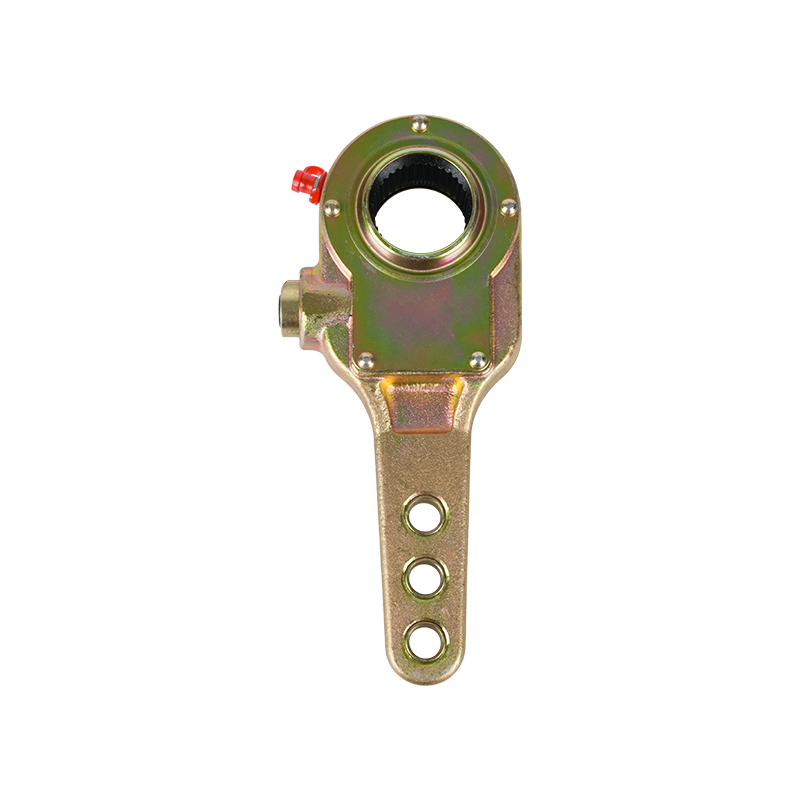
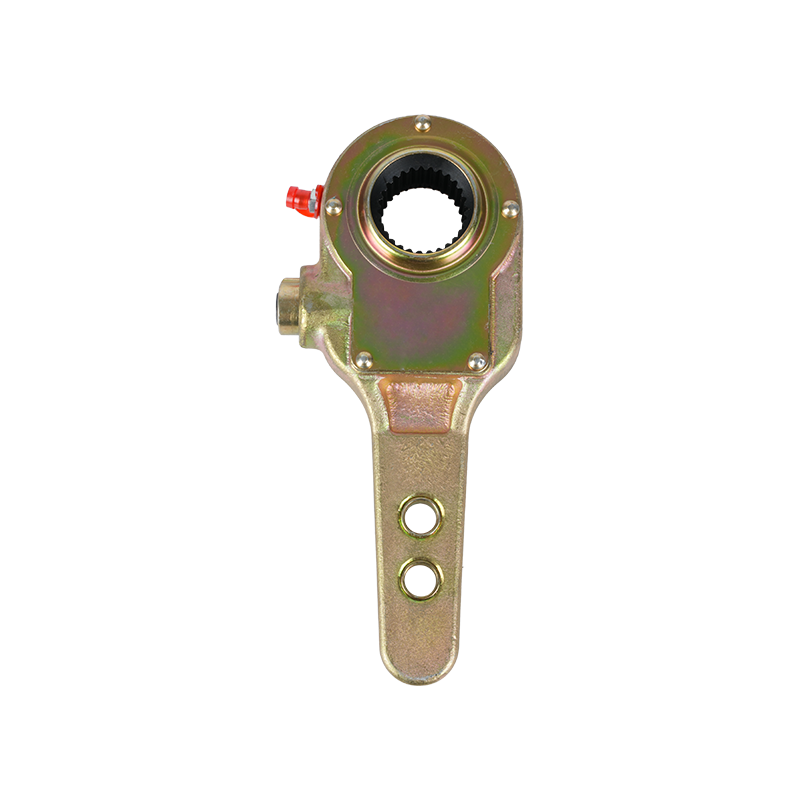
Manual shaking: Try to move the adjuster by hand or with a pry bar. If it's very loose, and the pin holes at the connection are worn into an oval shape, it indicates excessive wear.
Internal jamming: If you try to gently turn the adjusting bolt with a wrench and find that it doesn't move at all, or if it makes a metallic cracking sound when turning, it means that the internal gears or one-way clutch are broken.
Sometimes a faulty adjuster isn't too loose, but "too tight" or "doesn't return to position."
If, after driving for a distance (without much braking), you find that a wheel hub is too hot to touch, or even smoking and emitting a burning smell,
this may be due to over-adjustment of the slack adjuster, causing the brake pads to constantly rub against the brake drum, like constantly dragging a heavy object.
For **automatic** adjusters, there's a simple criterion for diagnosis:
If you manually adjust it, and after a few days the brake clearance increases again, it means its automatic compensation mechanism is completely broken. It should automatically "tighten" the clearance when you apply the brakes, but now it's like a broken gear that can't hold its position.
Observe the adjuster's casing. If you find that grease cannot be injected into the lubrication port, or if a large amount of rusty fluid is leaking from the inside.
Long-term lack of lubrication will cause internal parts to rust and seize, at which point it becomes a purely "metal lump," losing its adjusting function.


 English
 中文简体
中文简体 русский
 عربى
عربى