


 (+86)-137 5851 1881
(+86)-137 5851 1881
(+86)-137 5851 1881



Content
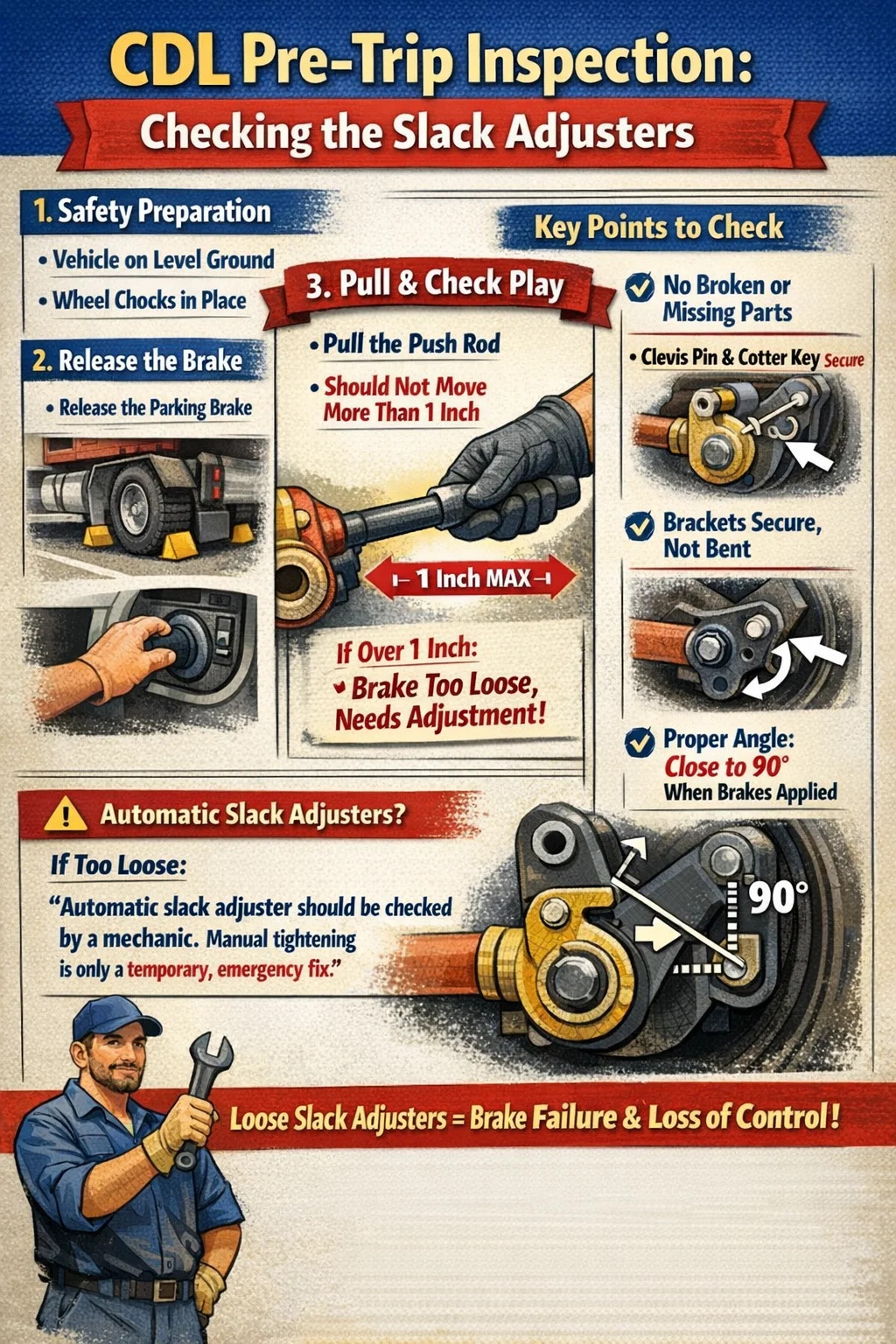
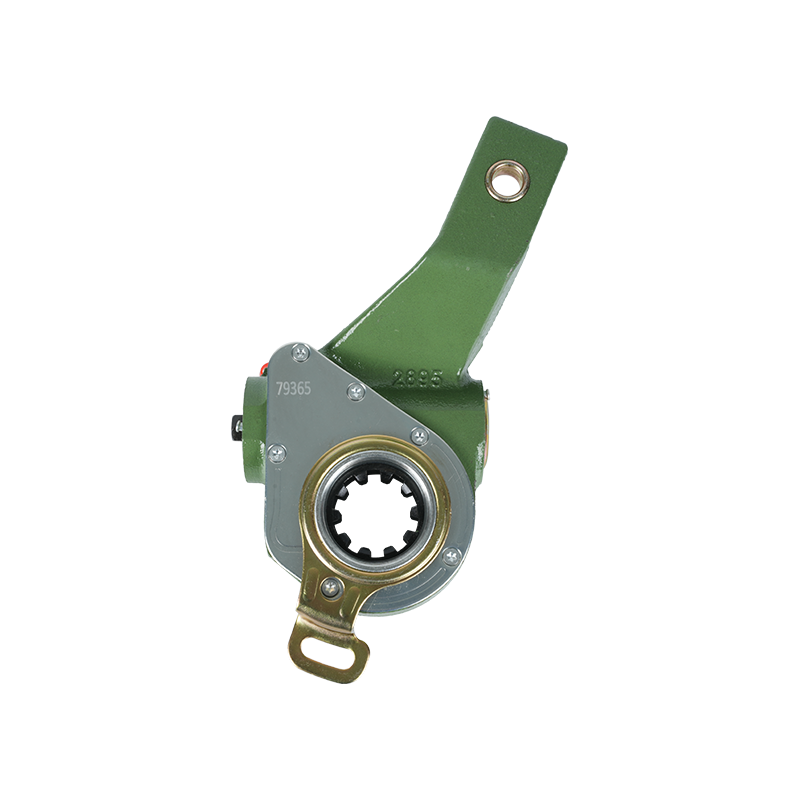
In the process of obtaining a Commercial Driver's License (CDL), the pre-trip inspection is a crucial part, and the inspection of slack adjusters is one of the items that examiners focus on most closely.
During the test, you not only need to perform the inspection manually, but also verbally explain the key points you are checking. Here are the requirements for this component in the CDL test:
When inspecting the slack adjusters and push rod, you must demonstrate the following steps to the examiner:
Safety Preparation: Tell the examiner that the vehicle is parked on level ground and the wheel wells are properly seated.
Release the Brake: Sit in the driver's seat and release the handbrake (air brake systems need to release pressure; otherwise, the parts will be locked and cannot be pulled).
Pull Forcefully: Wearing gloves, pull the push rod connected to the adjuster forcefully by hand.
Key Data Description: Tell the examiner that the push rod should not move more than 1 inch. If it does, the brake is too loose and needs adjustment.
The examiner not only checks if you pull the lever, but also how carefully you observe. You need to point and explain:
No Damaged or Missing Parts: Check that the adjuster itself is not cracked, and that the clevis pin and cotter key connecting the push rod are in place and not detached.
Secure Installation: Ensure that no parts are loose and the bracket is not bent or deformed.
Proper Angle: Although you don't need a protractor, you should mention that when the brake pedal is fully depressed, the angle between the adjuster and the push rod should be close to 90 degrees (a right angle), indicating that its leverage force is exerted optimally.
Most test vehicles nowadays use automatic adjusters. During the test, if the examiner asks you, "What if the slack adjuster is too loose?", you should answer like this:
Don't say "tighten it manually": Tell the examiner that if an automatic slack adjuster has too much play, it usually means it's broken or there's a problem elsewhere in the braking system, requiring a mechanic's inspection, not simply manual tightening. Manual adjustment is only a temporary emergency measure and doesn't solve the underlying problem.
Because in the CDL standards, the health of the braking system directly determines whether the vehicle can safely descend a slope or make emergency maneuvers. If the slack adjusters fail, even if you press the brake pedal all the way down, the brake pads may not engage the brake drum, and the entire vehicle will lose control.


 English
 中文简体
中文简体 русский
 عربى
عربى