


 (+86)-137 5851 1881
(+86)-137 5851 1881
(+86)-137 5851 1881



Content
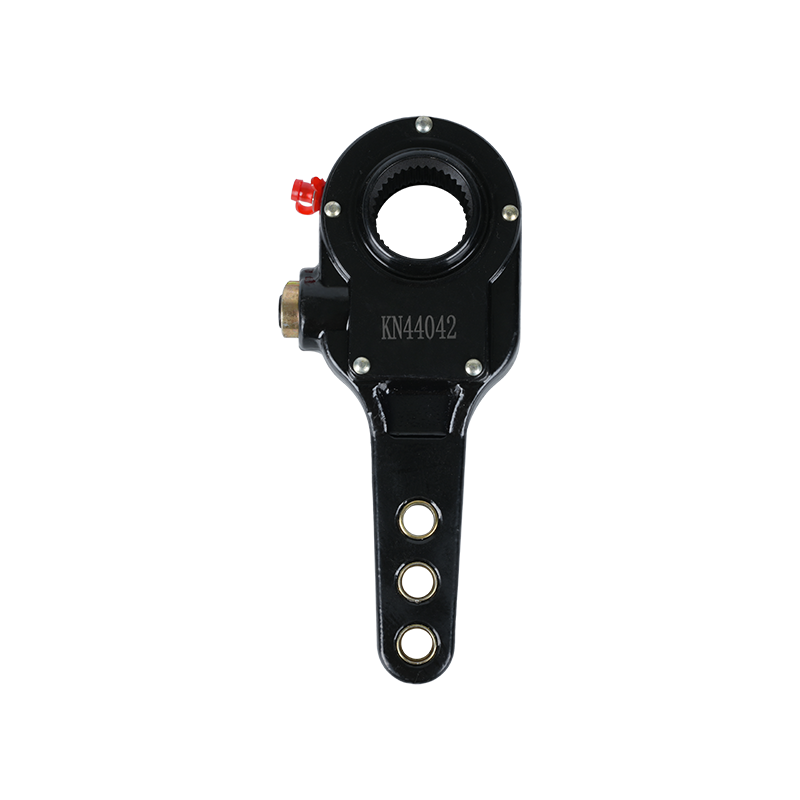
A slack adjuster serves two critical functions in a commercial vehicle's air brake system: it converts the linear push force of the brake chamber push rod into rotational torque on the S-cam (brake camshaft), which forces the brake shoes against the drum to stop the vehicle, and it maintains the correct clearance between the brake shoes and drum as the friction lining wears down over time.
Without a properly functioning slack adjuster, the push rod stroke increases as brake linings wear, progressively reducing braking force. In an automatic slack adjuster (ASA), this clearance compensation happens continuously and automatically during each braking cycle—requiring no manual intervention during normal operation. This is why automatic slack adjusters have become the regulatory standard for air-braked commercial vehicles in most major markets worldwide.
To understand what a slack adjuster does, it helps to trace the full braking force path on a heavy-duty truck or trailer:
This last step is the defining function of an automatic slack adjuster. While a manual adjuster requires a technician to periodically turn an adjustment bolt by hand, the automatic version uses an internal worm gear, ratchet, and one-way clutch assembly to sense push rod over-stroke and compensate in real time—every single brake application.
The internal mechanism of a standard automatic slack adjuster for commercial trucks operates on the following principle:
Each time the brake is applied, the push rod moves through a defined travel arc. The adjuster's internal control mechanism monitors this arc. If the push rod exceeds a preset stroke threshold—indicating that the brake shoes have worn and the drum clearance has grown too large—the compensation mechanism activates.
In the most common mechanical ratchet lever design used on heavy trucks, the over-stroke triggers a pawl that advances the ratchet by one tooth position. This turns the worm gear, which rotates the camshaft spline by a small, precise increment—shortening the effective push rod stroke needed to achieve shoe contact and restoring optimal clearance. The one-way clutch ensures this rotation occurs only in the tightening direction; brake release does not reverse the adjustment.
Advanced designs—such as the locking sleeve structure slack adjuster produced by Zhuji Tianbo Auto Parts Co., Ltd.—use a driving helical gear sleeve and reset spring working in combination with the worm gear transmission system. This configuration improves response speed and compensation accuracy by monitoring brake pad and drum wear in real time through synergy of the one-way clutch and the locking mechanism. The preload of the reset spring and the clearance groove geometry are precisely engineered to prevent overcompensation (brake drag) while eliminating under-compensation (excessive clearance).
Understanding how automatic and manual slack adjusters differ helps fleet managers, technicians, and procurement teams make the right specification decision.
| Feature | Automatic Slack Adjuster | Manual Slack Adjuster |
|---|---|---|
| Clearance compensation | Continuous, automatic every brake cycle | Requires periodic manual adjustment |
| Maintenance requirement | Inspect only; no routine readjustment | Regular manual readjustment required |
| Internal mechanism | Worm gear, ratchet, one-way clutch | Simple lever and adjustment bolt |
| Regulatory status (post-1994 US) | Mandatory (49 CFR 393.53) | Non-compliant on new vehicles |
| Typical applications | Long-haul trucks, trailers, buses | Pre-1994 vehicles, agricultural, specialty |
| Risk of improper manual adjustment | High—damages internal mechanism | Low—designed for manual operation |
Under 49 CFR 393.53, the U.S. Federal Motor Carrier Safety Administration (FMCSA) requires all air-braked commercial motor vehicles manufactured on or after October 20, 1994 to be equipped with automatic slack adjusters. This regulatory requirement reflects decades of evidence that manual adjusters were frequently under-adjusted in field conditions, contributing to braking deficiencies in roadside inspections.
Automatic slack adjusters are not a single design—they vary significantly by power transmission method and the operating environment they are built for. The main categories relevant to commercial vehicle and heavy equipment fleets include:
The most widely deployed design for trucks and trailers. During braking, the push rod movement drives a lever that pushes a pawl, advancing the ratchet one tooth if over-stroke is detected. Simple, durable, and cost-effective—the ratchet produces a characteristic click during adjustment. This is the mainstream design found on the vast majority of commercial semi-trailers and heavy trucks in service today.
This design uses a helical gear clutch at the end of the push rod. Compensation occurs on the brake release stroke rather than the application stroke—the clutch engages as the rod retracts, rotating the adjustment screw slightly in the compensating direction. The double-spring mechanism provides an anti-reverse locking function, making it particularly suited to heavy-duty and mining machinery where vibration and shock loads are high.
A patented design in which the driving worm sleeve, one-way clutch spring, and reset spring work in coordinated sequence to monitor wear in real time and deliver precise incremental compensation. The locking sleeve design reduces the risk of overcompensation that can cause brake drag, while maintaining reliable performance across wide temperature ranges. Zhuji Tianbo Auto Parts produces this design with an optimized spring preload and clearance groove geometry for improved response speed and service durability.
Certain operating conditions demand purpose-engineered variants:
A slack adjuster that is out of adjustment—or failing—directly compromises braking distance and brake force balance across axles. In a fully loaded semi-truck traveling at highway speed, even a small increase in push rod stroke across multiple axles can translate into a meaningfully longer stopping distance. The consequences in a panic stop scenario are severe.
The most common causes of automatic slack adjuster failure, based on field experience, include:
Although automatic slack adjusters are designed to be maintenance-free in terms of routine re-adjustment, they still require regular inspection. The key checks during preventive maintenance and pre-trip inspection include:
With the vehicle on level ground and the brakes fully released, mark the push rod and apply 90 psi (or the system operating pressure) to the brake circuit. Measure push rod travel. For a standard Type 30 brake chamber, the maximum allowable stroke at full application is typically 2.0 inches (50.8 mm) at the standard angle. Any measurement consistently exceeding the limit indicates that the automatic adjuster is not compensating correctly and must be inspected or replaced.
With brakes released, attempt to rotate the adjuster's worm gear bolt without activating the release mechanism. On a properly functioning automatic adjuster, the bolt should resist rotation due to the engaged one-way clutch. If it rotates freely without the release being engaged, the internal clutch has failed and the unit requires replacement.
Many automatic slack adjusters have a grease fitting. Check the manufacturer's specification for re-greasing intervals—typically at each brake reline or at defined mileage intervals. Use only the specified grease type; applying incompatible lubricants can wash out factory-filled grease or create a compound that congeals at low temperatures and restricts internal movement.
After installing new brake shoes, the adjuster push rod must be retracted using the correct release tool (typically a hex wrench engaging the release mechanism) before the new, thicker linings will clear the drum. After reassembly, the vehicle must not be driven until the brakes have been applied multiple times at low speed to allow the automatic mechanism to re-establish the correct clearance reference point. Failure to complete this re-synchronization step results in either severe brake drag or dangerously insufficient brake force from the first stop.
For fleet maintenance managers and OEM procurement teams, selecting an automatic slack adjuster involves more than matching a part number. The following criteria directly affect fit, function, and service life:
| Specification | Why It Matters | Common Values |
|---|---|---|
| Spline count and size | Must match camshaft spline exactly | 28-spline, 10-spline, others |
| Arm length | Determines mechanical advantage and push rod geometry | 5.5", 6", 6.5", 7" |
| Clevis pin hole diameter | Must fit push rod clevis without play | 0.625" (15.9 mm), 0.75" (19 mm) |
| Adjuster orientation (left/right hand) | Ensures correct geometry on left vs. right axle ends | Left-hand, right-hand, universal |
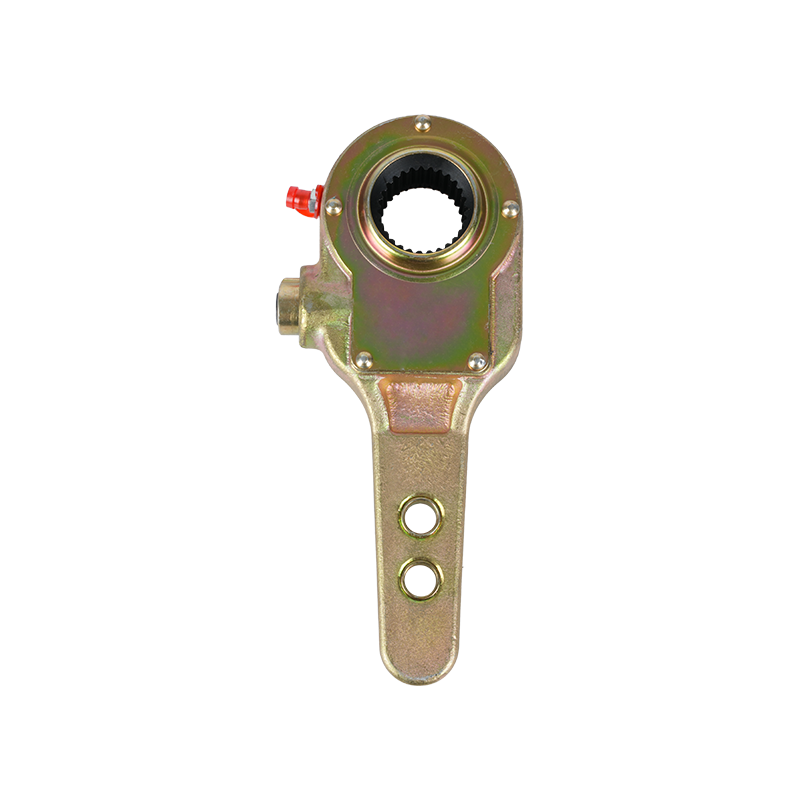
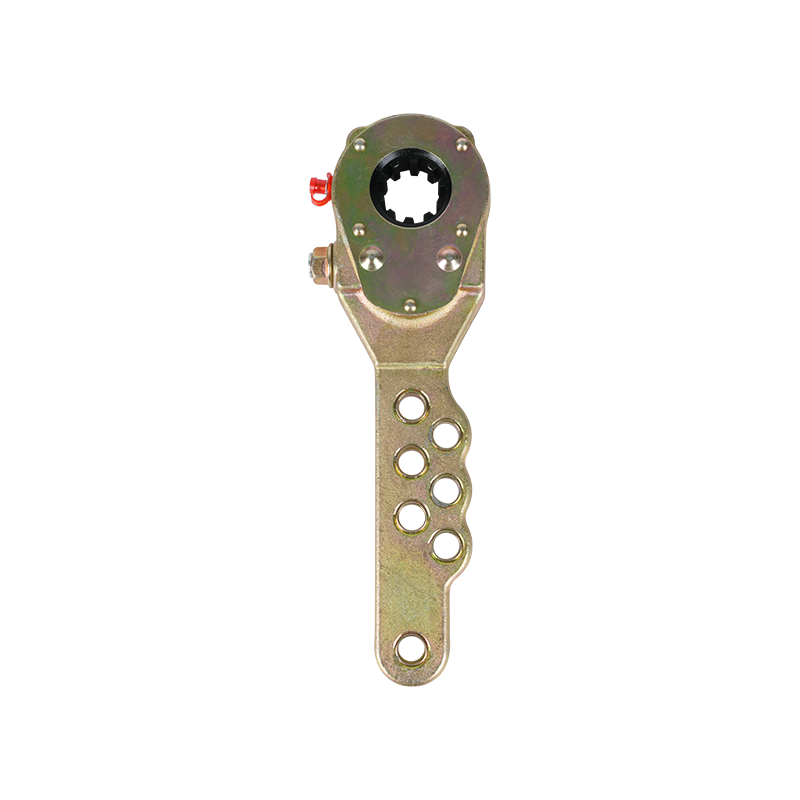
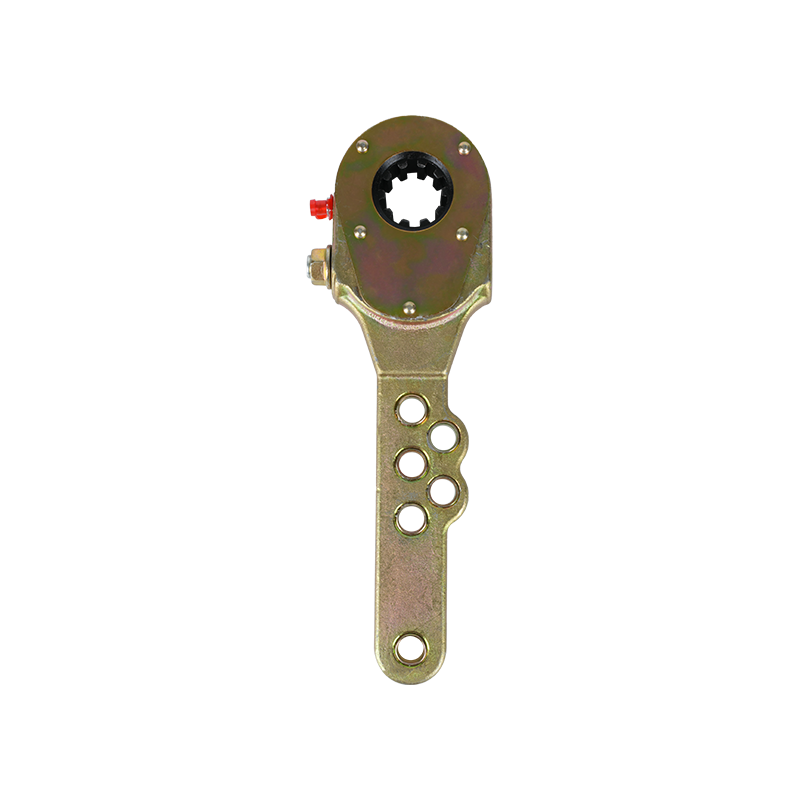
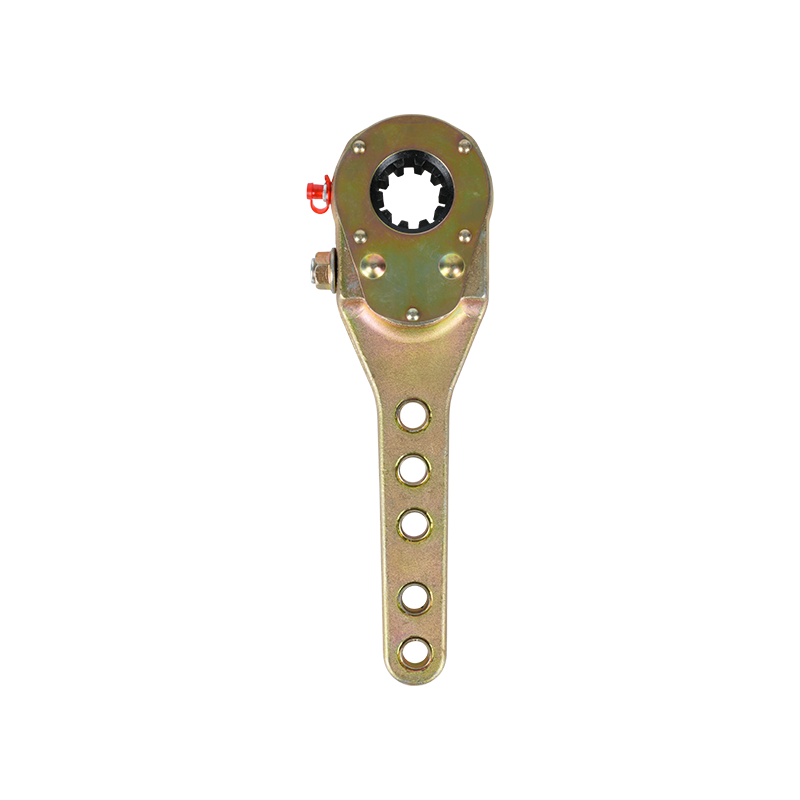
| Housing material and finish | Affects corrosion resistance and service life | Cast steel, black-painted, gold zinc-plated |
| Quality standard certification | Confirms manufacturing consistency | ISO/TS 16949, CE |
Manufacturers such as Zhuji Tianbo Auto Parts Co., Ltd. (zjtbautoparts.com), operating under the ISO/TS 16949 quality management system, produce automatic slack adjusters covering a full range of truck, trailer, and heavy-equipment applications. Their product range includes locking sleeve structure, double spring, and standard automatic variants—with both black and gold zinc-plated surface finish options—and supports OEM and custom specifications for international export markets including Europe, North America, and Southeast Asia.


 English
 中文简体
中文简体 русский
 عربى
عربى