


 (+86)-137 5851 1881
(+86)-137 5851 1881
(+86)-137 5851 1881



Content
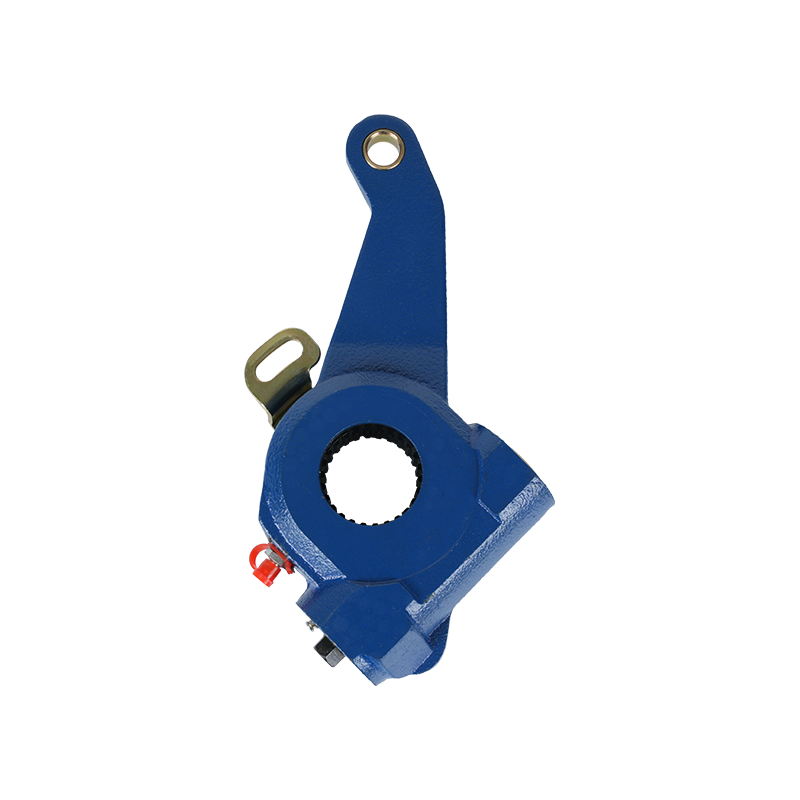
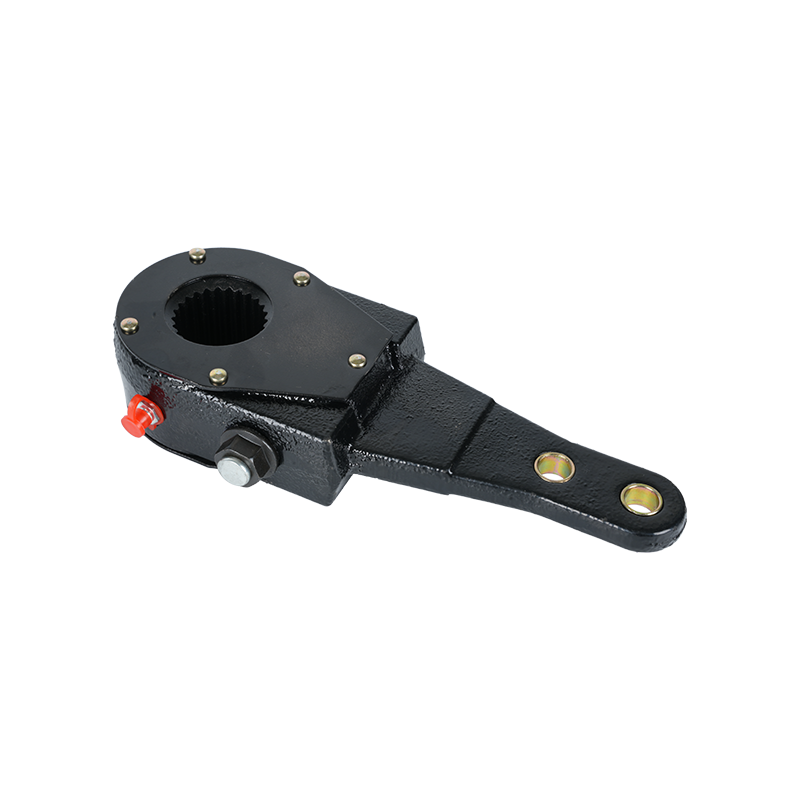
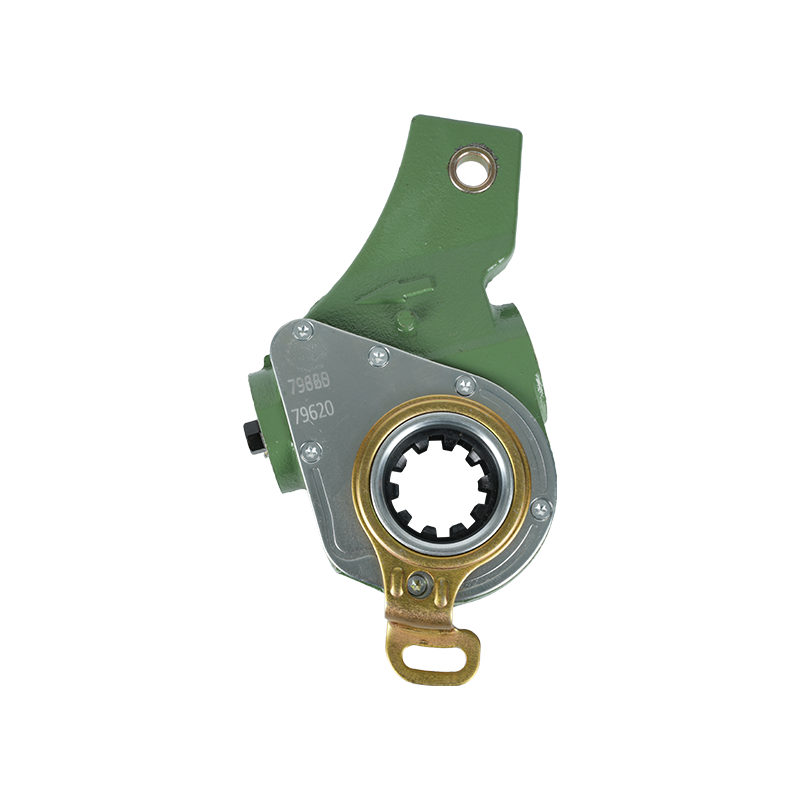
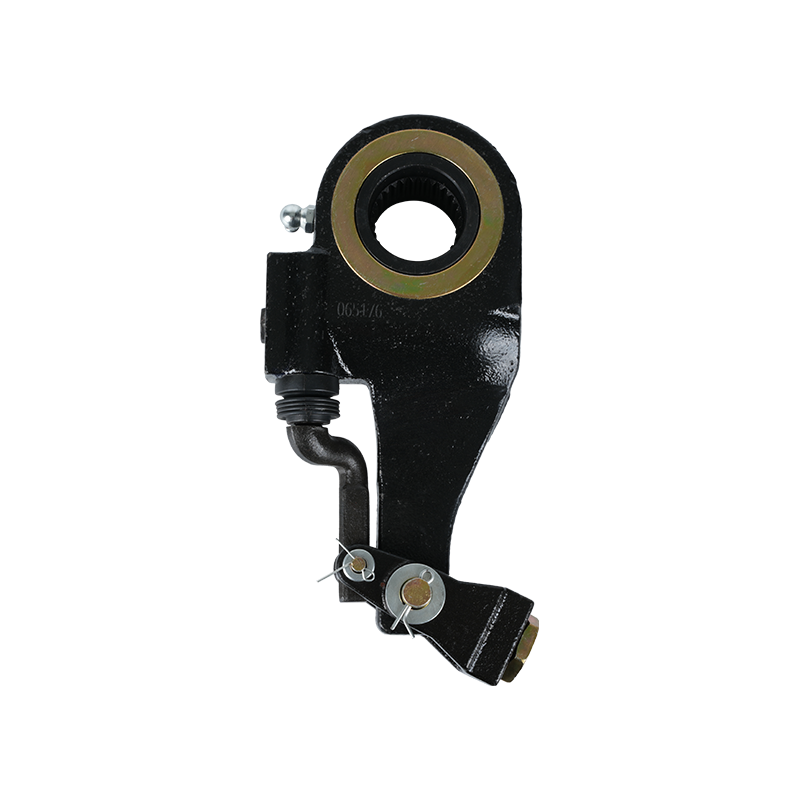
A slack adjuster is a mechanical arm that connects the air brake chamber's pushrod to the brake camshaft. When the brakes are applied, compressed air pushes the pushrod outward, and the slack adjuster converts that linear force into rotational force on the S-cam, which spreads the brake shoes against the drum. Without a properly functioning slack adjuster, the brake shoes cannot make full contact with the drum, drastically reducing stopping power.
The term "slack" refers to the gap or play between the brake shoes and the drum. As brake linings wear down over time, that gap increases, meaning the pushrod has to travel farther before the brakes actually engage. The slack adjuster's job is to compensate for that wear and keep the pushrod stroke within a safe operating range — typically defined by FMCSA regulations as no more than a specific measurement depending on brake chamber type and size.
Slack adjusters are found on virtually all medium and heavy commercial vehicles equipped with air brakes — Class 6, 7, and 8 trucks, trailers, buses, and certain construction equipment. They are mounted on each brake axle end and work in conjunction with the foundation brake assembly.

There are two main types of slack adjusters used in air brake systems: manual and automatic. Understanding the difference is critical for maintenance scheduling and roadside inspections.
Manual slack adjusters require periodic adjustment by a trained mechanic or technician. They have a hex-head adjusting bolt — typically a 9/16-inch fitting — that must be turned to rotate the worm gear inside, which repositions the adjuster arm relative to the camshaft and tightens the brake-to-drum clearance. Manual adjusters must be checked and adjusted as frequently as every day under heavy-use conditions. Neglecting manual adjustment is one of the most common reasons commercial vehicles fail brake inspections.
Manual slack adjusters are still found on older vehicles and certain specialized equipment. Since 1994, the FMCSA has required all newly manufactured air-braked trailers to use automatic slack adjusters, and since 1995 the same rule applies to trucks and buses. However, vehicles manufactured before those dates may still legally operate with manual units if they are maintained properly.
Automatic slack adjusters — commonly abbreviated as ASAs — self-adjust every time the brakes are applied. An internal mechanism senses when the pushrod stroke exceeds the optimal range and rotates the adjuster to compensate. In theory, a properly functioning ASA should maintain the correct pushrod stroke at all times without human intervention. In practice, ASAs still need to be inspected regularly because they can seize, wear out, or malfunction, and a stuck automatic adjuster will not self-correct.
A common misconception is that automatic slack adjusters require zero maintenance. That is incorrect. If an ASA cannot maintain the pushrod stroke within spec, the underlying cause is often worn brake linings or drums — conditions the adjuster cannot fix on its own. Replacing the adjuster without addressing the root cause will only result in repeated out-of-adjustment brakes.
| Feature | Manual Slack Adjuster | Automatic Slack Adjuster |
|---|---|---|
| Adjustment Method | Manual, by technician | Self-adjusting on each brake application |
| Maintenance Frequency | Daily to weekly checks | Regular inspection still required |
| Required Since | Legacy equipment only | 1994 (trailers), 1995 (trucks/buses) |
| Risk of Maladjustment | High if not maintained | Lower, but still possible if seized |
| Typical Application | Older trucks, specialty vehicles | All modern commercial vehicles |
To understand why the slack adjuster matters so much, it helps to trace how air brakes actually work from pedal to wheel.
The slack adjuster is essentially the lever in this system. Like any lever, its effectiveness depends on the length of the arm and the angle at which force is applied. The optimal geometry occurs when the slack adjuster arm is approximately 90 degrees to the pushrod at the point of full brake application. When brakes are out of adjustment, this angle deviates, reducing mechanical advantage and braking efficiency.
The arm length of a slack adjuster is measured in inches and is stamped or cast on the adjuster body. Common lengths are 5-1/2 inches and 6 inches. The arm length must match the brake chamber size and the manufacturer's specification for the axle — mixing incorrect arm lengths is a serious safety error that affects braking torque.
Federal regulations under 49 CFR Part 393 and CVSA brake inspection standards define maximum allowable pushrod stroke lengths for each chamber size. Exceeding these limits means the brakes are out of adjustment and the vehicle is placed out of service.
Here are examples of maximum stroke limits for common brake chamber types:
| Chamber Type | Max Stroke (Standard) | Max Stroke (Long Stroke) |
|---|---|---|
| Type 12 | 1-3/4 in (44 mm) | 2 in (51 mm) |
| Type 16 | 1-3/4 in (44 mm) | 2 in (51 mm) |
| Type 20 | 1-3/4 in (44 mm) | 2 in (51 mm) |
| Type 24 | 1-3/4 in (44 mm) | 2 in (51 mm) |
| Type 30 | 2 in (51 mm) | 2-1/2 in (64 mm) |
| Type 36 | 2-1/4 in (57 mm) | 3 in (76 mm) |
A brake that is even 1/4 inch over the maximum stroke limit can reduce braking force by 20 percent or more. In a fully loaded 80,000-pound combination vehicle, that reduction in braking torque can add dozens of feet to stopping distance — enough to cause a catastrophic collision at highway speeds.
Inspectors measure pushrod stroke by marking the pushrod at rest, applying approximately 90 psi of air pressure to the brakes, and measuring how far the pushrod moved. This test is quick and straightforward, which is why it is one of the first things a CVSA inspector checks during a Level I inspection.
A bad or out-of-adjustment slack adjuster does not always announce itself dramatically. In many cases, the vehicle still stops — just not as effectively or evenly. Here are the most reliable indicators that something is wrong.
If the brake pedal requires more pressure than usual or the vehicle takes noticeably longer to respond, the pushrods may be traveling too far before the shoes contact the drum. This is a direct symptom of slack adjusters that are too loose.
If one slack adjuster is properly adjusted and the one on the opposite axle end is not, the braking force will be unequal. The side with more braking force will slow faster, causing the vehicle to pull in that direction. This is especially dangerous in wet or slippery conditions and can cause jackknife situations on combination vehicles.
During a visual inspection with the brakes applied, you can watch each pushrod. If it appears to be fully extended or very close to fully extended, the slack adjuster is not maintaining proper clearance between shoes and drum. At maximum stroke, the diaphragm inside the chamber is pushing against the chamber wall rather than applying force, which is mechanically inefficient and dangerous.
The opposite problem — an adjuster set too tight — keeps the brake shoes in partial contact with the drum even when the brakes are released. This creates constant friction, generating heat. Drum temperatures above 400°F (204°C) indicate brake drag and can cause brake fade, liner glazing, or even fire in extreme cases. You can identify drag by touching the wheel hub area after driving (carefully — it may be extremely hot) or by smelling burning friction material.
If you or your shop has manually adjusted an automatic slack adjuster and it immediately goes back out of spec, this is a sign the ASA itself is faulty — typically a worn or seized internal clutch mechanism — or that the brake linings are worn beyond serviceable limits. Simply re-adjusting the same automatic adjuster repeatedly without investigating the root cause is both ineffective and a violation of manufacturer guidelines. Meritor, Haldex, and other manufacturers explicitly state that an ASA requiring repeated manual adjustment should be replaced, not re-adjusted.
Inspection procedures differ slightly depending on whether the adjuster is manual or automatic, but the core steps apply to both.
If you have a manual slack adjuster that is out of spec, the adjustment procedure is as follows:
Never attempt to manually adjust an automatic slack adjuster to compensate for excessive pushrod stroke — this disables the self-adjusting function and masks an underlying problem. The correct procedure is to diagnose why the ASA is not maintaining adjustment and address that cause directly.
Understanding what causes slack adjusters to fail or go out of adjustment helps in both prevention and diagnosis.
This is the single most common reason brakes go out of adjustment. As lining material wears down, the gap between shoe and drum increases, requiring more pushrod travel. A manual adjuster that is not serviced regularly will keep moving further and further out of spec. Even an automatic adjuster will eventually exhaust its range of adjustment if linings are not replaced in time. Most brake lining manufacturers recommend inspection at 50,000-mile intervals for highway vehicles, or at every scheduled PM service.
Automatic slack adjusters contain internal gears, pawls, and a one-way clutch mechanism. These components depend on grease to function correctly. When grease breaks down or is washed out — common in vehicles regularly exposed to high-pressure washing — the internal mechanism seizes and the adjuster loses its ability to self-adjust. Grease intervals vary by manufacturer but are typically every 25,000 miles or every 3 months, whichever comes first.
The clevis pin connects the pushrod to the slack adjuster arm. Over time, the pin and its bore wear, creating slop in the connection. This slop is not taken up by the adjuster — it adds directly to the effective stroke length. A worn clevis pin can add as much as 1/4 inch to the apparent stroke, which could push an otherwise-compliant brake into out-of-service territory.
Using a slack adjuster with the wrong arm length for the brake chamber and axle specification is a more common installation error than most fleets realize. An arm that is too long creates excessive mechanical advantage and can over-apply the brakes, while an arm that is too short reduces braking torque. Always match the replacement adjuster to the OEM specification for that axle position.
Physical damage from road debris, curb strikes, or improper installation can bend the adjuster arm or crack the housing. A bent arm changes the effective length and geometry of the adjuster, compromising braking torque. Any adjuster with visible cracks or bending must be replaced immediately — it is not a component that can be straightened or welded and returned to service.
Slack adjusters are wear components with a finite service life. Most manufacturers suggest replacement at 300,000 to 500,000 miles under normal conditions, though severe-duty applications may require earlier replacement. Here are the conditions that warrant immediate replacement:
When replacing a slack adjuster, always replace the clevis pin and bushing at the same time if they show wear. Reusing a worn clevis pin with a new adjuster introduces the same stroke measurement error that was just corrected.
After installation, grease the adjuster through the zerk fitting until fresh grease exits the seal, apply the brakes several times to allow the ASA to index and set itself, and then re-measure pushrod stroke to confirm proper adjustment before returning the vehicle to service.
Out-of-adjustment brakes — most commonly caused by slack adjuster problems — represent one of the top out-of-service violations found during CVSA roadside inspections. In the CVSA's annual Brake Safety Week inspections, out-of-adjustment brakes consistently account for a significant share of all brake-related violations. In a recent CVSA inspection blitz, approximately 12 to 14 percent of all inspected commercial vehicles were placed out of service for brake defects, with slack adjuster-related issues among the leading causes.
An out-of-service violation for brake adjustment puts the vehicle off the road immediately and can result in fines, driver disqualification, and negative SMS scores in the FMCSA's Safety Measurement System. Carriers with high SMS brake scores are flagged for priority intervention, which can trigger audits and compliance reviews.
Beyond the regulatory penalties, the safety consequences of running out-of-adjustment brakes are severe. Studies by the FMCSA and NHTSA have consistently shown that commercial vehicles with brake defects are significantly overrepresented in fatal crash data. A loaded combination vehicle traveling at 65 mph needs roughly 400 feet to stop under normal conditions — brake defects can extend that distance by 25 percent or more.
Drivers have a legal obligation under 49 CFR Part 396 to conduct pre-trip and post-trip inspections that include a basic brake check. While drivers are not typically expected to measure pushrod stroke precisely, they should be able to recognize obvious signs of brake drag, pulling, or abnormal pedal feel, and report them before operating the vehicle.
Several related terms often appear alongside slack adjuster in maintenance discussions. Here is a quick reference to keep them straight.


 English
 中文简体
中文简体 русский
 عربى
عربى