


 (+86)-137 5851 1881
(+86)-137 5851 1881
(+86)-137 5851 1881



Content
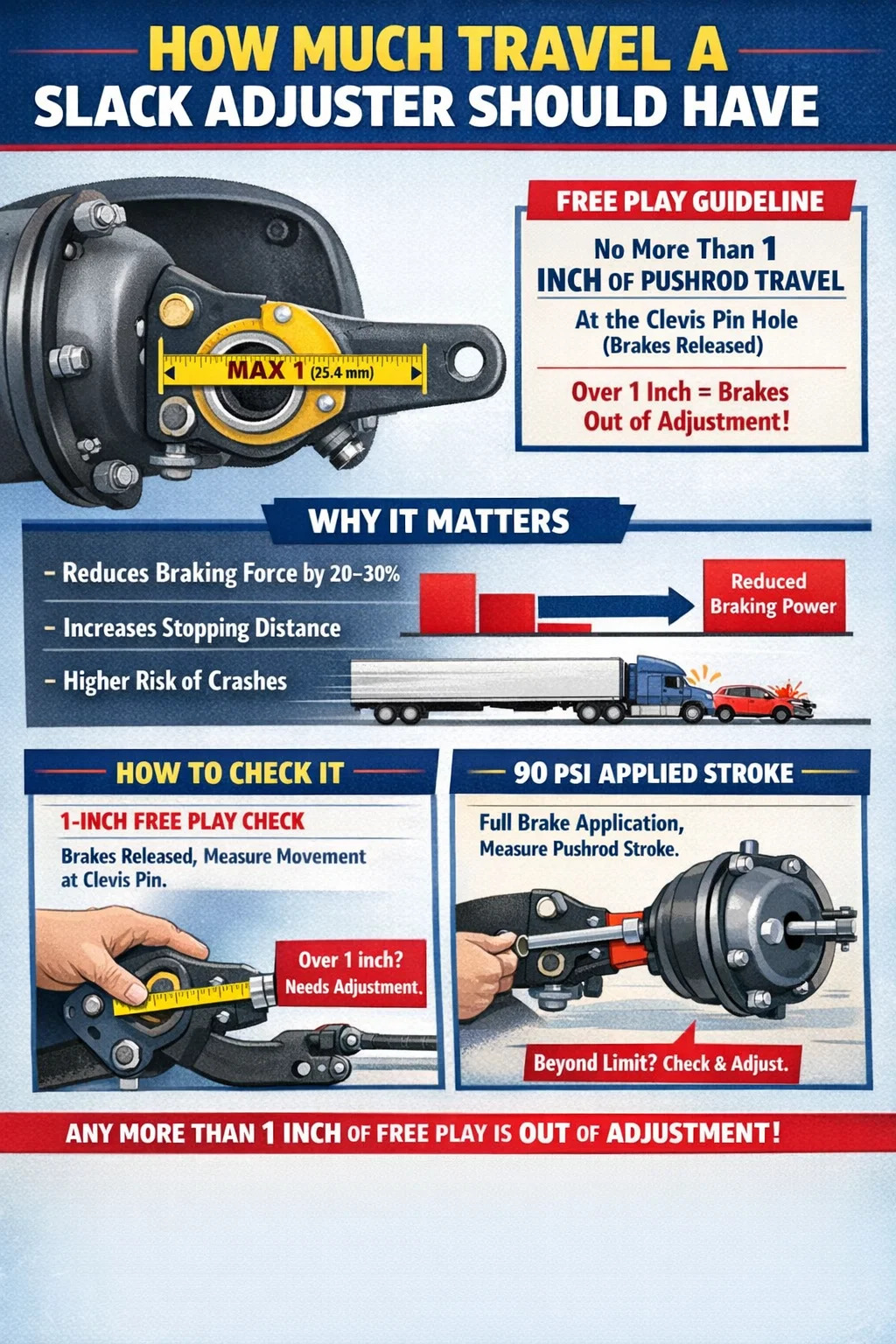
A slack adjuster — whether manual or automatic — should have no more than 1 inch (25.4 mm) of pushrod travel measured at the clevis pin hole when the brakes are fully released. This is the standard set by the Federal Motor Carrier Safety Administration (FMCSA) under 49 CFR Part 393.47, and it applies to commercial motor vehicles operating on U.S. roads.
If the pushrod stroke exceeds the legal limit during a brake application, the vehicle is considered out-of-service. The exact limit depends on the type and size of the brake chamber, but 1 inch of free play at the clevis pin is the widely accepted field measurement that indicates proper adjustment. Any slack adjuster showing more than 1 inch of travel at that point needs immediate attention.
This measurement is critical because brake effectiveness drops sharply when the pushrod travels too far before the shoes contact the drum. A stroke that is even slightly over the limit can reduce braking force by 20–30%, which at highway speeds translates to significantly longer stopping distances and increased crash risk.
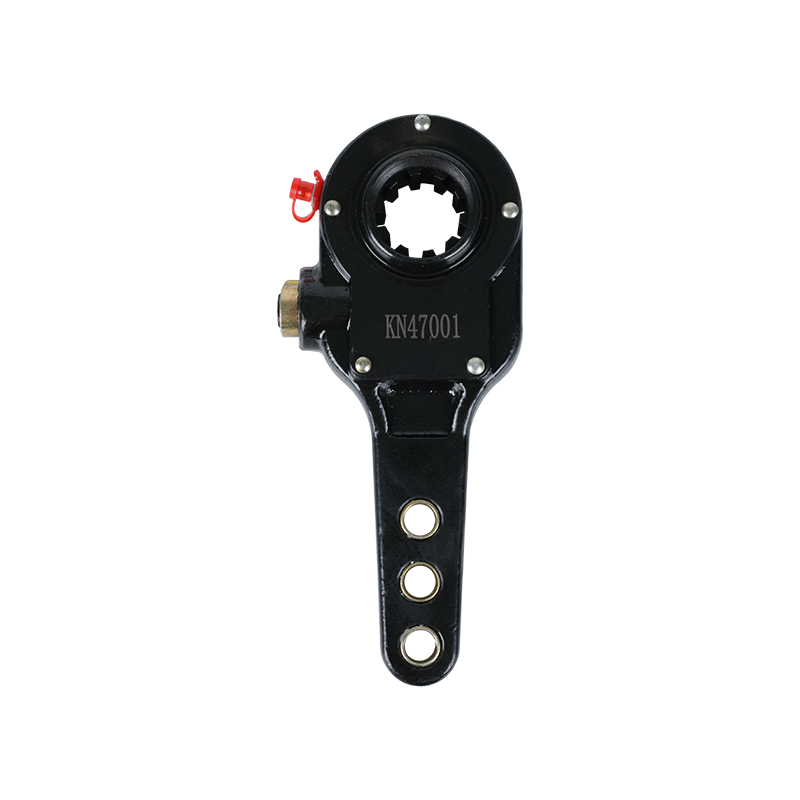
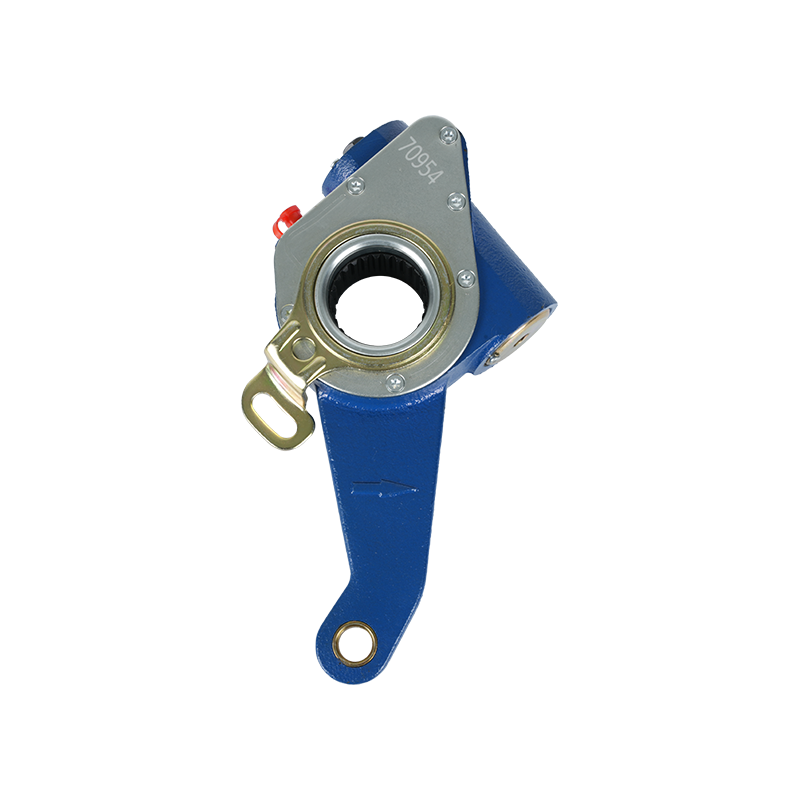
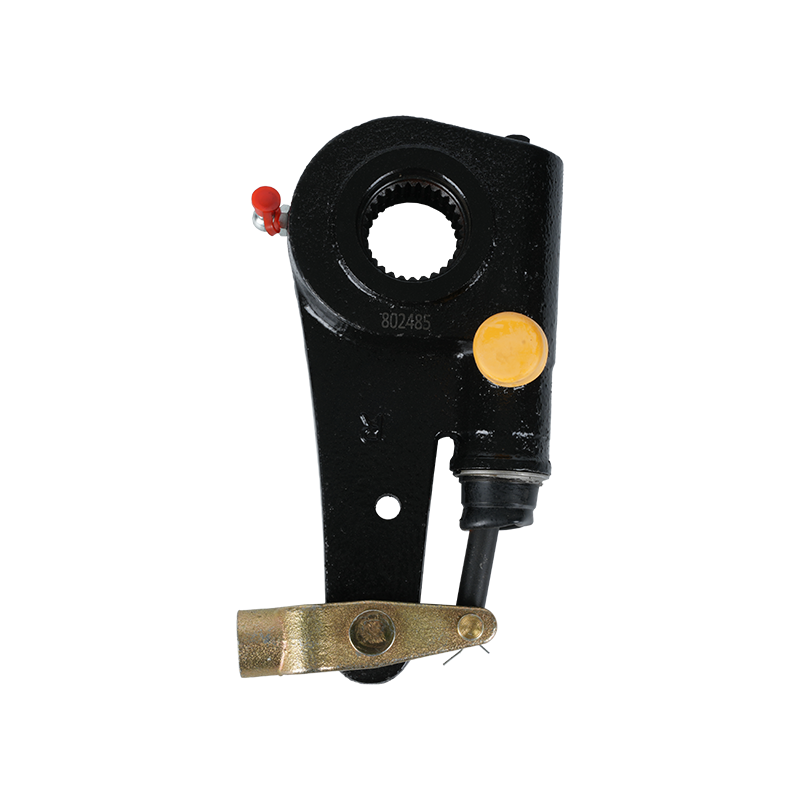
A slack adjuster is a lever arm that connects the air brake chamber pushrod to the S-cam shaft or cam brake assembly on a drum brake system. Its primary function is to convert the linear motion of the pushrod into rotational force that spreads the brake shoes against the drum. As brake linings wear down over time, a gap — or "slack" — develops between the shoes and drum. Without adjustment, the pushrod has to travel farther to take up that gap, which reduces the mechanical advantage and weakens braking force.
There are two main types found on commercial trucks and trailers:
A common misconception is that automatic slack adjusters never need attention. In reality, an ASA that consistently shows out-of-adjustment readings is almost always a sign of a mechanical problem — worn clevis pins, a seized cam, bad foundation brakes — not just a lazy adjuster. Repeatedly readjusting an ASA without finding the root cause is both dangerous and a violation of proper maintenance practice.
The FMCSA defines maximum allowable pushrod stroke based on the size and type of the brake chamber. These limits are the measured stroke at full brake application (90–100 psi system pressure), not free play. The following table outlines the standard limits:
| Chamber Type | Outside Diameter (in) | Max Stroke – Long Stroke (in) | Max Stroke – Standard (in) |
|---|---|---|---|
| Type 6 | 4.5 | 1.75 | 1.25 |
| Type 9 | 5.25 | 1.75 | 1.25 |
| Type 12 | 5.65 | 1.75 | 1.25 |
| Type 16 | 6.25 | 2.00 | 1.75 |
| Type 20 | 6.75 | 2.00 | 1.75 |
| Type 24 | 7.06 | 2.50 | 2.00 |
| Type 30 | 7.56 | 2.50 | 2.00 |
| Type 36 | 8.06 | 3.00 | 2.25 |
Type 24 and Type 30 chambers are the most common on Class 8 trucks and tractor-trailers. Exceeding these stroke limits during a roadside inspection results in an automatic out-of-service order under the Commercial Vehicle Safety Alliance (CVSA) guidelines.
Measuring slack adjuster travel properly takes a few minutes but is one of the most important pre-trip and maintenance checks on any air-braked vehicle. Here is how it is done:
This is a quick field check performed with the brakes released and the vehicle parked safely:
This is the method most roadside inspectors and experienced drivers use during walkarounds. It does not require full brake application or special tools — just a tape measure and a few minutes under the trailer or truck.
There are several reasons why a slack adjuster may show excessive travel, and identifying the correct cause determines the correct fix. Simply readjusting without investigation is a shortcut that creates a false sense of safety.
The most common cause of excessive stroke in manual slack adjuster systems is worn brake lining. As the friction material wears away, the drum-to-shoe clearance increases. On a manual adjuster, this means the driver or technician has simply not adjusted the brakes often enough. FMCSA guidelines recommend checking brake adjustment every 25,000 miles or during each preventive maintenance service, whichever comes first.
An ASA that repeatedly goes out of adjustment despite correct installation and healthy foundation brakes is likely internally defective. The one-way clutch mechanism inside the adjuster may be slipping or seized. In this case, the adjuster must be replaced — not manually adjusted, which masks the problem and may cause brakes to over-tighten and drag.
Excessive pushrod travel is often caused by problems beyond the adjuster itself. Common foundation brake issues include:
Each of these conditions increases the total travel required to generate braking force, which shows up as a high pushrod stroke reading even when the adjuster itself is functioning correctly.
A slack adjuster installed at the wrong angle will never maintain correct adjustment regardless of lining condition. The arm angle at brake release should be between 85 and 95 degrees relative to the pushrod — as close to a right angle as possible. If the arm is installed too far forward or backward, the geometric relationship between the cam and pushrod changes, leading to either chronic over-stroke or dragging brakes.
While both types of slack adjusters serve the same purpose, how they manage travel differs significantly in practice.
| Feature | Manual Slack Adjuster | Automatic Slack Adjuster |
|---|---|---|
| Adjustment frequency | Every PM or as needed | Self-adjusting during brake use |
| Human error risk | High (forgotten adjustments) | Lower (but not zero) |
| Out-of-adjustment diagnosis | Usually just lining wear | Often indicates deeper problem |
| Correct response when out of adjustment | Manually turn adjustment bolt | Inspect foundation brakes; replace ASA if needed |
| Required since | Pre-1994 | 1994 (new vehicles) |
One critical point for technicians: never manually back off an automatic slack adjuster and then readjust it repeatedly. Doing so defeats its internal mechanism and turns it into a poorly functioning manual adjuster. If the ASA cannot hold adjustment on its own, replace it.
Adjusting a manual slack adjuster is a straightforward process when done correctly. Safety precautions are essential because working near brake components on a loaded vehicle carries real risk.
The target applied stroke should be roughly 75% of the chamber's maximum allowable stroke. For a standard Type 30 chamber with a 2.00-inch limit, that puts the ideal stroke at about 1.5 inches under a full application. This gives enough margin for lining wear between adjustments without starting out at the legal edge.
The consequences of running a vehicle with out-of-adjustment slack adjusters range from regulatory fines to fatal crashes. This is not a maintenance item that can be deferred until the next service interval once it is identified as a problem.
Research by the FMCSA and the American Trucking Associations Technical and Maintenance Council (TMC) has consistently shown that a single out-of-adjustment brake on a tractor-trailer can increase stopping distance by as much as 25%. When multiple axles are out of adjustment — which is common when maintenance has been deferred — stopping distances can increase by 40% or more. At 60 mph, a fully loaded 80,000-pound combination vehicle already requires nearly 300 feet to stop under ideal conditions. A 40% increase in that distance adds 120 feet, which at highway speeds is the difference between a near-miss and a collision.
An over-adjusted brake that drags constantly — often the result of backing off a manual adjuster too little — generates excess heat in the drum. Sustained temperatures above 400°F begin to glaze linings and reduce friction coefficient. Above 600°F, drum distortion becomes possible. In either case, the effective braking force of that axle drops significantly, which the driver may not notice until emergency braking is required.
Under CVSA North American Standard inspection procedures, a single brake found out of adjustment on a vehicle with fewer than four air-braked axles results in an out-of-service order. On vehicles with more axles, the threshold is proportional. For fleets, an out-of-service order means lost revenue, a towed vehicle, and a mark on the carrier's Safety Measurement System (SMS) score. Repeated violations can trigger targeted interventions from the FMCSA, including compliance reviews.
In crash litigation, documented brake adjustment violations create serious liability exposure for both the driver and the motor carrier. Plaintiff attorneys routinely request brake inspection records in trucking accident cases, and a history of out-of-adjustment findings with no corrective action is damaging evidence.
Trailer brake maintenance is often less rigorous than tractor brake maintenance because trailers change hands between carriers, are used seasonally, or sit in drop yards for extended periods. This makes trailer slack adjusters a disproportionately common source of brake violations.
Key points for trailer slack adjuster management:
Drivers performing pre-trip inspections on a newly coupled trailer should always check brake adjustment before leaving the yard. A trailer that has been sitting for two weeks or more should be treated as suspect until measured.
There is no universal one-size-fits-all interval for slack adjuster checks because operating conditions vary significantly. A vehicle running loaded interstate miles in flat terrain puts far less demand on its brakes than one doing frequent city delivery stops or mountainous hauls. The following general framework is used by most large fleets:
Fleets that implement pre-trip brake stroke checks as a non-negotiable step in the driver workflow consistently show lower brake-related out-of-service rates during roadside inspections. The data from the CVSA's annual Brake Safety Week enforcement events routinely shows that brake adjustment violations account for over 40% of all brake-related out-of-service orders — a category that pre-trip checks would catch before the vehicle ever encounters an inspector.
Experience across fleet maintenance programs and roadside inspection data points to several recurring errors that keep brake adjustment problems from being properly resolved.
This is the single most common mistake. When an ASA is found out of adjustment, the technician turns the adjustment bolt to bring it into spec and sends the vehicle out. Within days or weeks, the brake is out of adjustment again. The cycle repeats. The correct response is to replace the ASA and inspect the foundation brakes, not to keep manually chasing the adjustment.
A common rationalization is that one slightly out-of-adjustment brake on a multi-axle vehicle is not a big deal. In reality, brake load sharing between axles means that an underperforming brake on one axle forces the others to compensate, accelerating their lining wear and heat buildup. It also creates yaw tendencies during hard braking, which can contribute to trailer swings.
Technicians who tighten the adjustment bolt too far without properly backing it off create a brake that drags constantly. This manifests as a hot wheel end after a short drive, a burning smell from the wheel, and accelerated lining and drum wear. It can also cause the brake to lock up during light applications, particularly dangerous in wet or slippery conditions.
Brake stroke measurements taken at low air pressure — say, 60–70 psi — will show a shorter stroke than at 90 psi because the actuating force is lower. This can make a marginally over-stroked brake appear to be within spec. Always verify system pressure is between 90 and 100 psi before taking a stroke measurement.


 English
 中文简体
中文简体 русский
 عربى
عربى