


 (+86)-137 5851 1881
(+86)-137 5851 1881
(+86)-137 5851 1881



Content
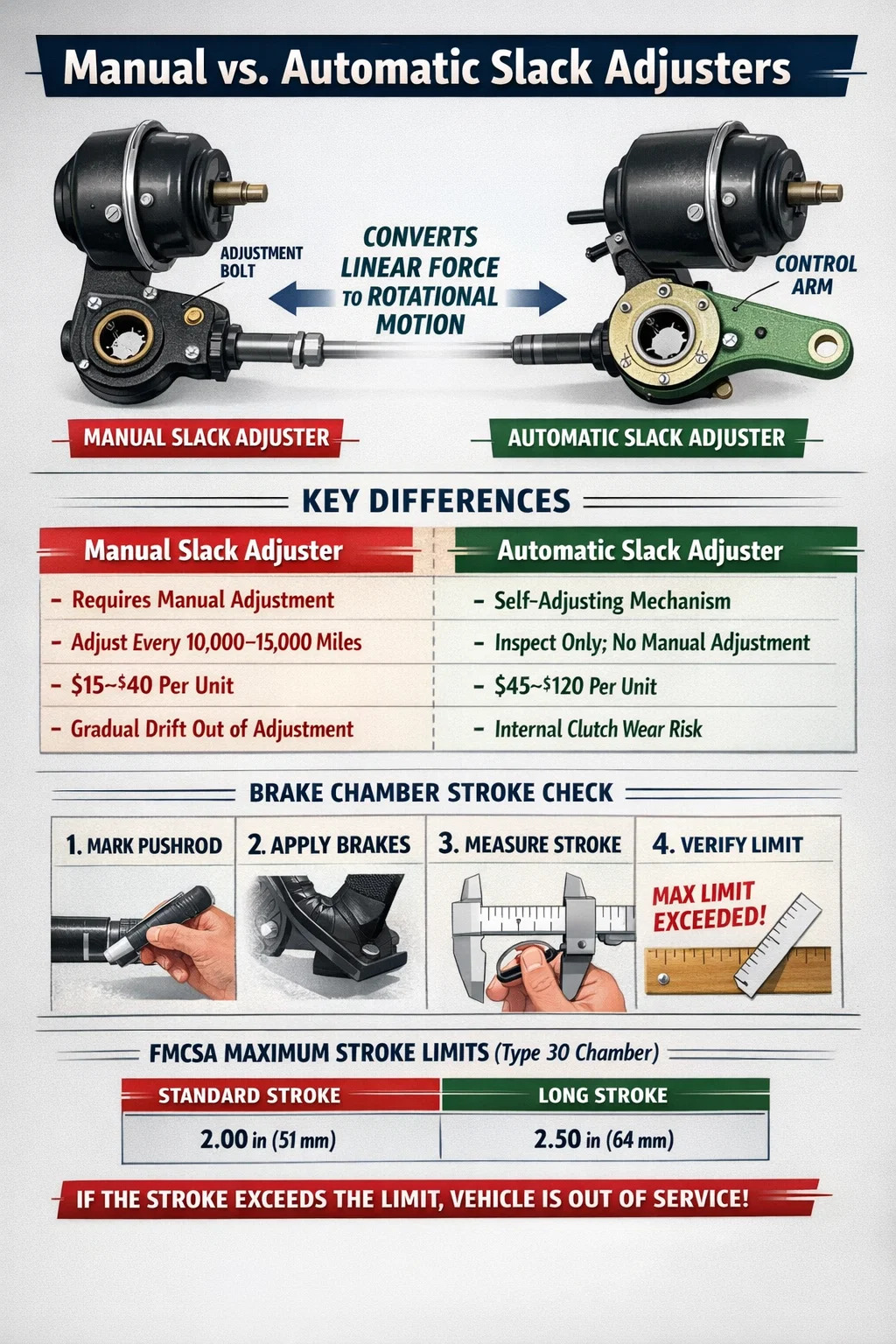
A truck slack adjuster is the mechanical link between the air brake chamber pushrod and the brake camshaft. When the driver applies the brakes, compressed air pushes the pushrod outward, and the slack adjuster converts that linear force into rotational torque that spins the S-cam, forcing the brake shoes against the drum. Without a properly functioning slack adjuster, the brake chamber's stroke is wasted — the shoes never fully contact the drum, stopping distances increase, and the vehicle may fail a roadside inspection on the spot.
The term "slack" refers to the small amount of clearance that must exist between the brake lining and the drum when the brakes are released. As linings wear, that clearance grows. The slack adjuster's job — whether done manually by a technician or automatically by internal mechanism — is to keep that clearance within spec so that full braking force is available every time the pedal goes down.
The legally required maximum brake chamber stroke in North America under FMCSA regulations is defined by chamber size — for a Type 30 chamber, that limit is 2 inches (51 mm). Exceed it and the vehicle is placed out of service. A slack adjuster that is out of adjustment, seized, or worn is one of the most common reasons commercial trucks fail Level I roadside inspections.
Two main categories of slack adjuster are used on commercial trucks today: manual slack adjusters and automatic slack adjusters (ASAs). Each has a distinct operating principle, maintenance requirement, and regulatory history.
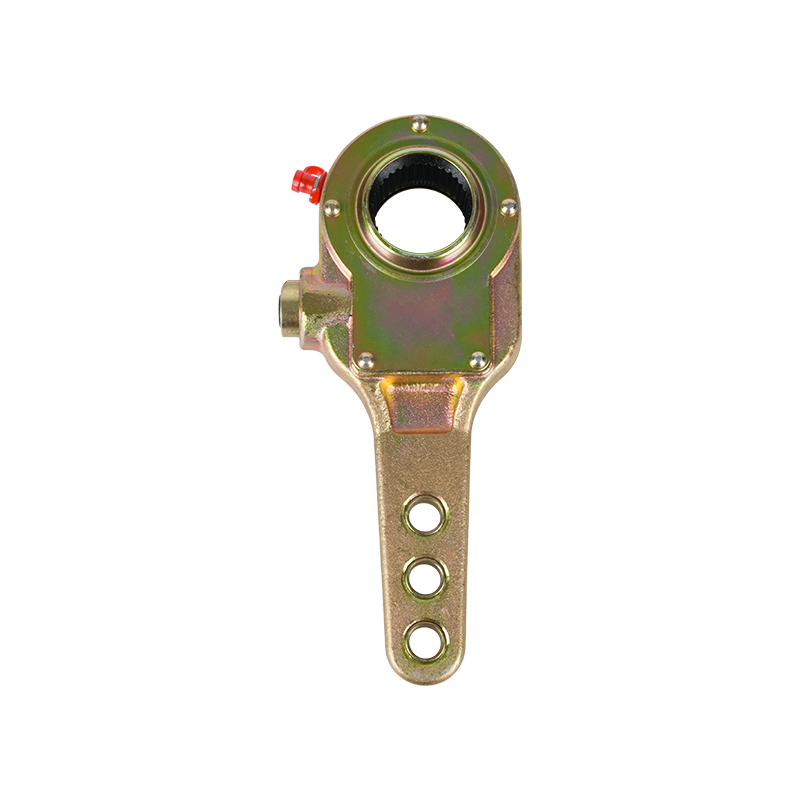
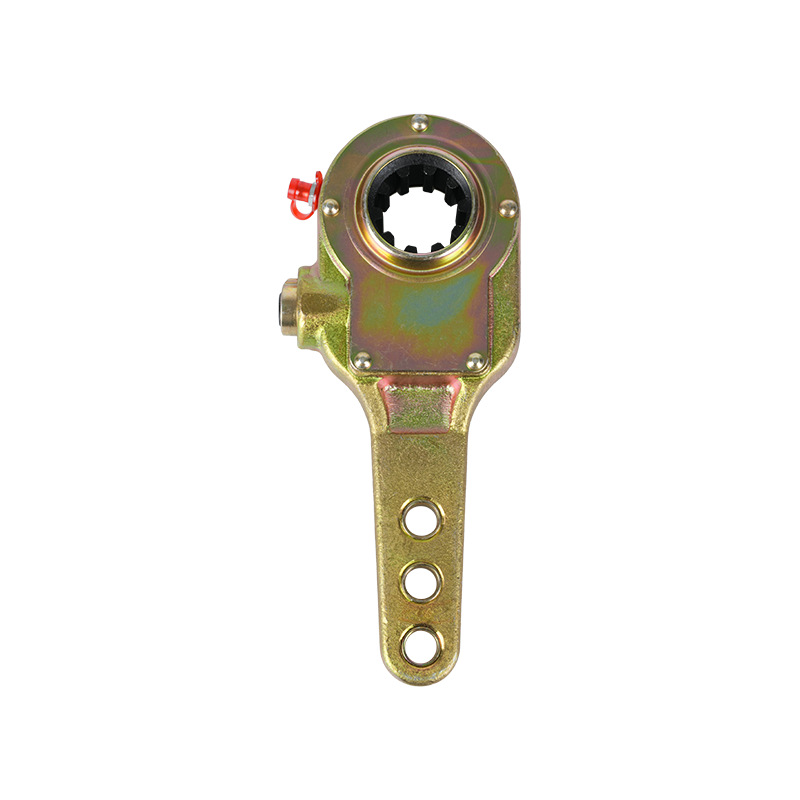
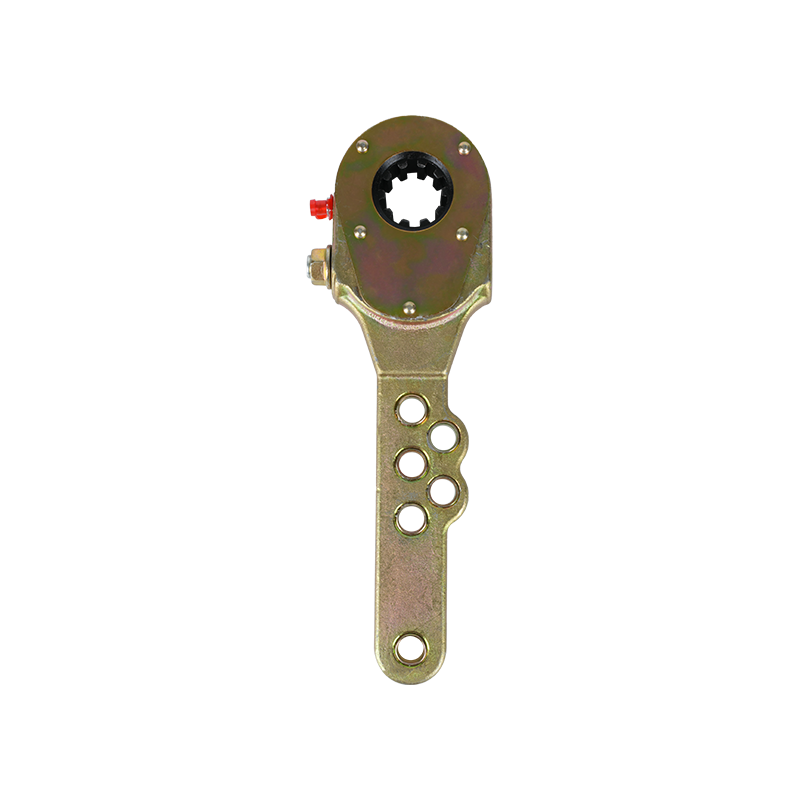
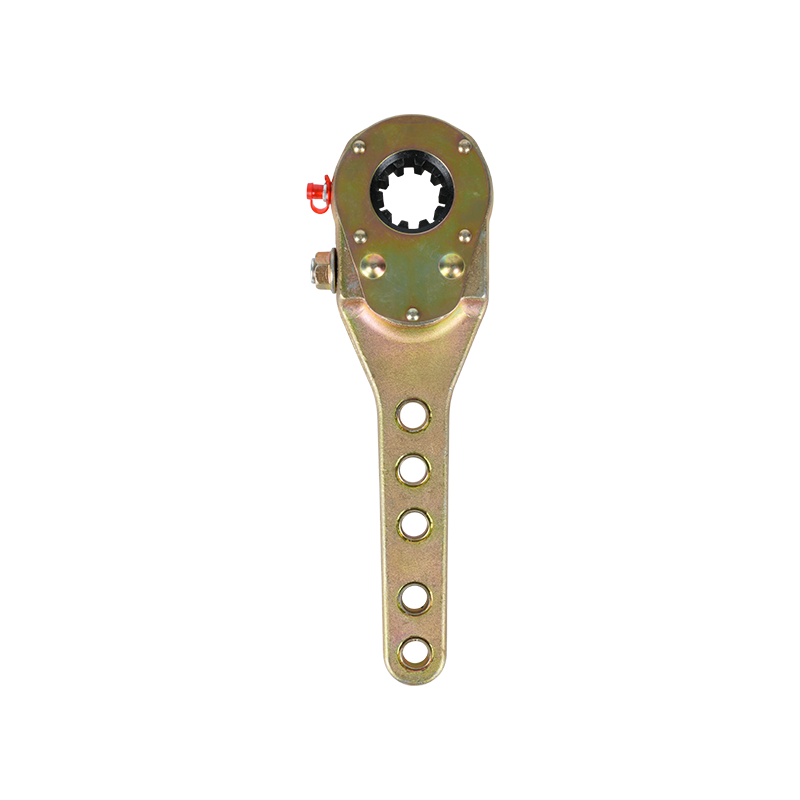
Manual slack adjusters require a technician to physically turn an adjustment bolt — typically a 9/16-inch hex fitting — to rotate the worm gear inside the adjuster body and change the position of the brake camshaft. There is no self-correcting mechanism. If the driver or fleet maintenance team does not follow a scheduled inspection interval, the adjustment drifts out of spec as the lining wears. In high-mileage operations, this can happen within a single week of service.
Manual units are simpler to manufacture and less expensive per axle. They remain in service on older trailers and some specialized equipment, but FMCSA regulations have required automatic slack adjusters on all newly manufactured air-braked vehicles since October 20, 1994, meaning the majority of the active fleet has carried ASAs for over 30 years.
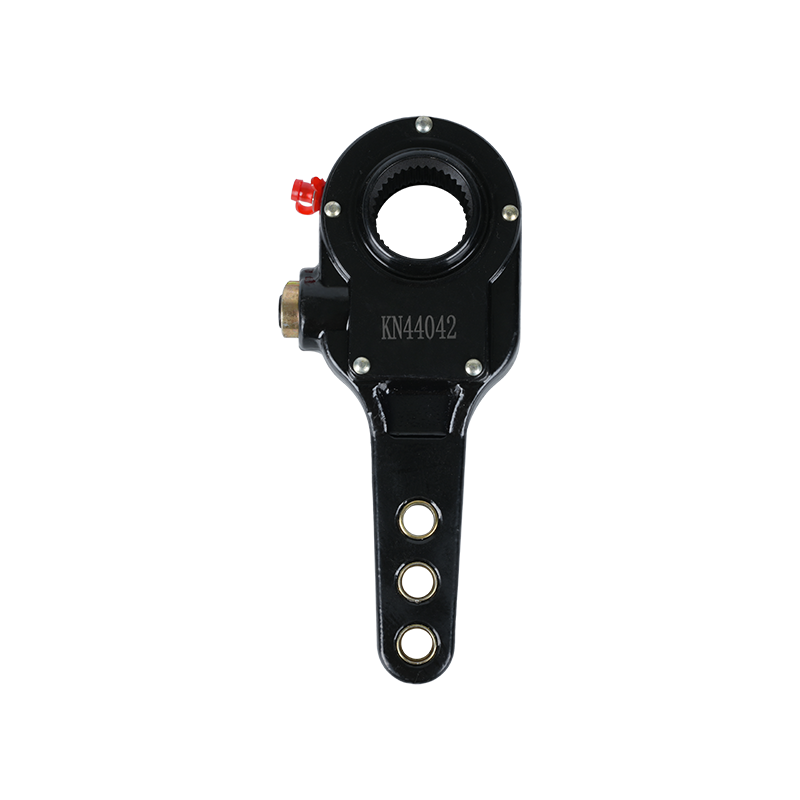
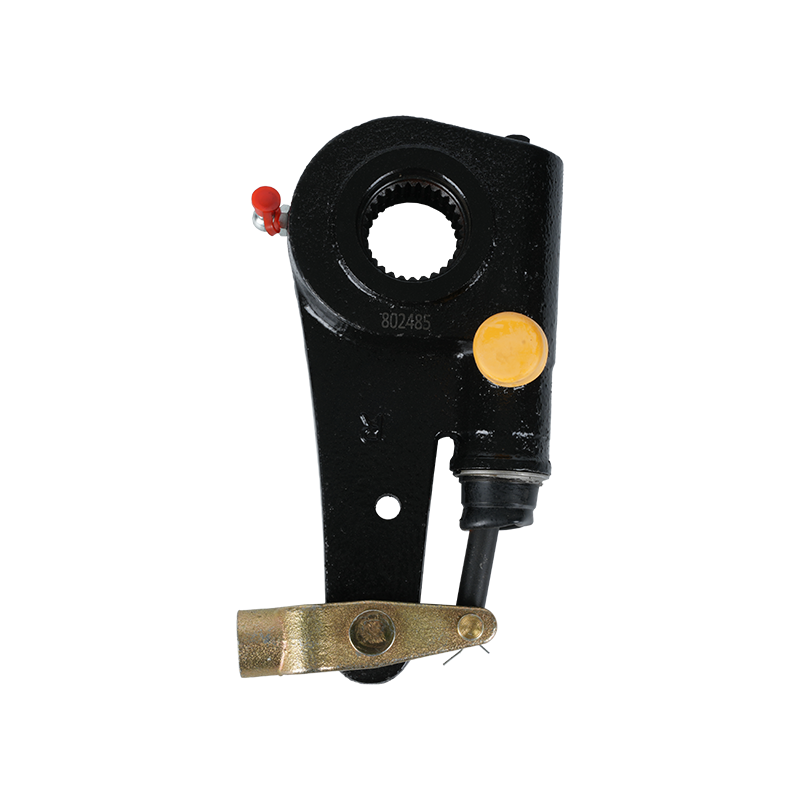
An automatic slack adjuster uses an internal one-way clutch mechanism, a worm gear, and a control arm that senses actual chamber stroke during each brake application. When the stroke exceeds the set threshold, the internal pawl rotates the worm gear incrementally, advancing the camshaft and reducing lining-to-drum clearance. This happens continuously and automatically during normal operation, without any technician input.
The critical point many drivers misunderstand: an ASA does not eliminate the need for inspection. It eliminates the need for routine manual adjustment. If an ASA is constantly readjusting itself and still cannot maintain stroke within limits, that is a symptom of a worn lining, a seized camshaft bushing, a cracked brake drum, or a faulty adjuster — not a sign that the technician simply needs to turn the adjustment bolt again.
| Feature | Manual Slack Adjuster | Automatic Slack Adjuster |
|---|---|---|
| Self-adjusting | No | Yes |
| Routine adjustment interval | Every 10,000–15,000 miles | Inspect only; no manual adjustment under normal operation |
| Regulatory requirement (new vehicles) | Not permitted since 1994 | Required since October 1994 |
| Cost per unit (approximate) | $15–$40 | $45–$120 |
| Failure mode risk | Gradual drift out of adjustment | Internal clutch wear, over-adjustment |
| Lubrication requirement | Grease fitting (regular) | Grease fitting (regular) |
The standard method for verifying slack adjuster adjustment is measuring the applied brake chamber stroke. This does not require removing any components — it is a measurement procedure that any qualified technician or driver with basic tools can perform.
Common chamber type stroke limits for reference:
| Chamber Type | Standard Stroke Limit | Long-Stroke Limit |
|---|---|---|
| Type 9 | 1.75 in (44 mm) | — |
| Type 12 | 1.75 in (44 mm) | — |
| Type 16 | 1.75 in (44 mm) | 2.50 in (64 mm) |
| Type 20 | 1.75 in (44 mm) | 2.50 in (64 mm) |
| Type 24 | 1.75 in (44 mm) | 2.50 in (64 mm) |
| Type 30 | 2.00 in (51 mm) | 2.50 in (64 mm) |
| Type 36 | 2.25 in (57 mm) | — |
Always identify the chamber type stamped on the chamber body before comparing measurements. Using the wrong reference limit is a common and costly error during pre-trip inspections.
Manual adjustment applies primarily to vehicles with manual slack adjusters and to re-setting the initial adjustment after installing a new automatic slack adjuster. It is not — and this cannot be stated clearly enough — a routine maintenance step for an ASA already in service. Repeatedly manually adjusting an in-service ASA masks an underlying problem and is a violation of proper brake maintenance practice.
The goal is a pushrod stroke of between 3/4 inch and the applicable maximum limit for the chamber type. A stroke that is too short — under 3/4 inch — indicates the shoes are riding too close to the drum and may cause brake drag, heat buildup, and premature lining wear.
Slack adjuster failure does not always announce itself dramatically. In many cases the degradation is gradual, showing up first as a roadside inspection violation rather than a sudden brake loss event. Knowing the warning signs allows fleets to catch problems before they become out-of-service violations or worse.
There is no universal mileage interval for automatic slack adjuster replacement because service life depends heavily on the operating environment, lubrication frequency, road salt exposure, and lining change history. However, several conditions make replacement mandatory rather than optional.
Grease is not optional for slack adjuster longevity — it is the primary defense against the internal corrosion that kills adjusters prematurely. Both manual and automatic slack adjusters have grease fittings (Zerk fittings) that must be serviced on a defined schedule.
The standard recommendation from most OEM manufacturers is to lubricate slack adjuster fittings every 25,000 miles or at each PM service, whichever comes first. In severe-duty cycles — tankers operating in salted winter roads, dump trucks in abrasive environments, refuse vehicles with frequent stop-start duty — that interval should be cut to 10,000–15,000 miles.
Use only NLGI Grade 1 or Grade 2 chassis grease that meets ASTM D4950 classification GC-LB or the chassis manufacturer's specific recommendation. Do not use lithium complex grease in applications where the OEM specifies calcium sulfonate or another chemistry — incompatible greases can cause internal separation and accelerate wear rather than prevent it.
When greasing, pump slowly until fresh grease appears at the seal or purge point. Over-pumping forces grease past internal seals and into the clutch mechanism of an ASA, which can disable the self-adjusting function. Two to three pumps of a hand-operated grease gun is adequate for most designs. If the fitting accepts no grease, the internal bore is either packed solid with hardened old grease or the fitting is plugged. Do not force additional pressure — remove the fitting, clear the port, and regrease.
The arm length of a slack adjuster is measured from the center of the camshaft bore to the center of the clevis pin hole. This dimension is critical because it sets the mechanical advantage — the ratio of linear force from the brake chamber to rotational torque applied to the camshaft.
Standard arm lengths for North American trucks run from 5-1/2 inches to 6-3/8 inches, with 5-1/2 inch being the most common on drive axles and 6 inch on some steer axle and trailer applications. The relationship between arm length and torque is direct: a longer arm produces more rotational torque from the same pushrod force, but requires more pushrod travel to achieve the same cam rotation angle. This is why mixing arm lengths across an axle — even by half an inch — creates a brake balance problem.
When the original slack adjuster arm length is unknown — for example, when a unit has been replaced in the field without documentation — the safest practice is to measure the remaining adjuster on the opposite side of the axle and match it exactly. Do not default to the most common size without confirming it against the opposite side.
The transition from manual to automatic slack adjusters introduced a new category of maintenance errors — mistakes that stem from misunderstanding how ASAs work. These are consistently cited in brake-related out-of-service violations and post-accident investigations.
The Commercial Vehicle Safety Alliance (CVSA) publishes annual out-of-service criteria that inspectors use during Level I, II, and III roadside inspections. Brake adjustment — specifically pushrod stroke — is one of the most frequently cited out-of-service conditions on commercial vehicles in North America.
According to CVSA data from recent inspection cycles, brake system violations consistently account for over 40% of all vehicle out-of-service orders, with brake adjustment (slack adjuster-related) making up a significant portion of that total. During CVSA's annual Brake Safety Week — typically held in late August — inspectors specifically target brake adjustment as a primary check.
A vehicle is placed out of service for brake adjustment when:
From a fleet operations perspective, a single out-of-service order triggers lost revenue, driver detention, towing costs if applicable, and a mark on the carrier's SMS (Safety Measurement System) score that affects CSA percentile ranking for 24 months. The cost of a missed slack adjuster inspection routinely exceeds $2,000 to $5,000 when total operational impact is calculated — far more than the cost of the adjuster itself.
Not every slack adjuster suits every truck or trailer application. Operating conditions, axle configuration, and brake chamber type all influence the correct selection. The following breakdown covers the most common scenarios.
Drive axles on Class 8 tractors typically use Type 30 or Type 24 brake chambers paired with 5-1/2 inch arm ASAs. The high torque demands of loaded tandem axles and the thermal stress of mountain grades make lubrication interval compliance especially important here. Sealed-body ASAs with extended lube intervals (up to 100,000 miles on some premium units) are available and increasingly preferred by long-haul fleets trying to reduce roadside service events.
Steer axles present unique packaging challenges because the slack adjuster must clear the steering knuckle through the full range of steering travel. Some steer axle designs use a shorter, offset slack adjuster body to avoid contact with the knuckle at full lock. Replacing a steer axle slack adjuster with a standard drive axle unit — even one with a matching arm length — can result in interference that damages both the adjuster and the steering geometry.
Trailers see less frequent maintenance attention than tractors, which makes ASA quality selection especially important. Trailers parked in outdoor storage face corrosion, moisture ingress, and extended periods between inspections. Premium trailer ASAs with stainless steel internal components and better seal designs offer meaningfully longer service life in these conditions. A trailer with three out-of-adjustment slack adjusters can pass a cursory visual inspection and still be grossly non-compliant on stroke measurement — something that only hands-on measurement reveals.


 English
 中文简体
中文简体 русский
 عربى
عربى