


 (+86)-137 5851 1881
(+86)-137 5851 1881
(+86)-137 5851 1881



Content
The short answer: manual slack adjusters should be checked and adjusted every 10,000 to 25,000 miles, or at every preventive maintenance (PM) interval — whichever comes first. Automatic slack adjusters (ASAs), by design, should not require routine manual adjustment. If an ASA needs frequent manual intervention, that is a warning sign of a deeper mechanical problem, not a maintenance task to schedule.
That said, both types of slack adjusters must be inspected regularly. The Federal Motor Carrier Safety Administration (FMCSA) requires that brakes — including slack adjusters — be checked as part of every pre-trip inspection for commercial motor vehicles. Skipping this step puts the vehicle out of compliance and, more importantly, creates a serious road safety hazard.
Understanding the difference between inspection and adjustment is critical. Inspection is daily. Adjustment — for manual types — follows a mileage or time-based schedule. Automatic slack adjusters handle their own adjustment but still need regular visual inspection to confirm they are functioning properly.
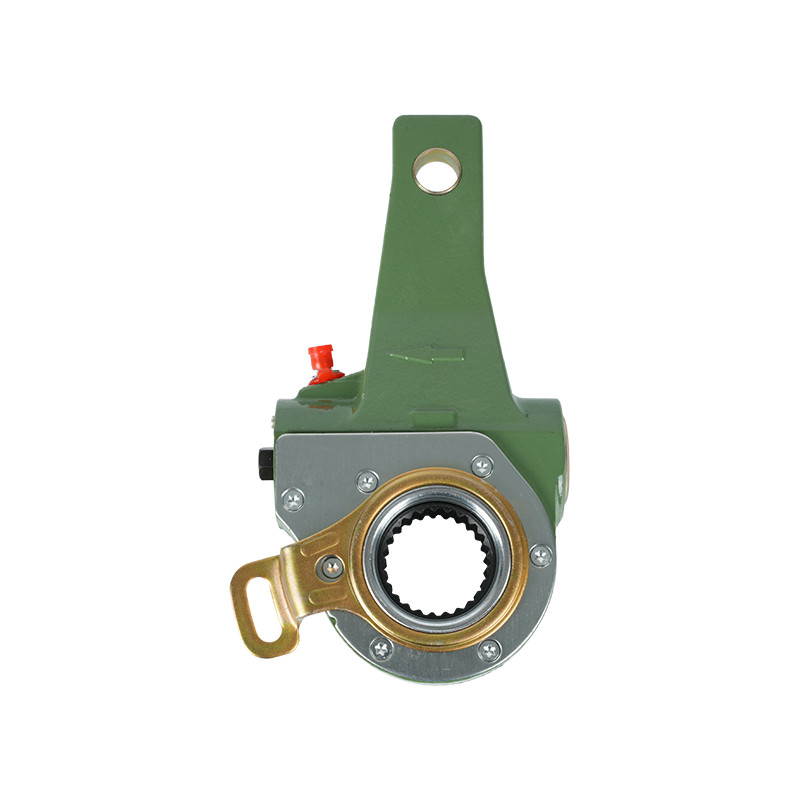
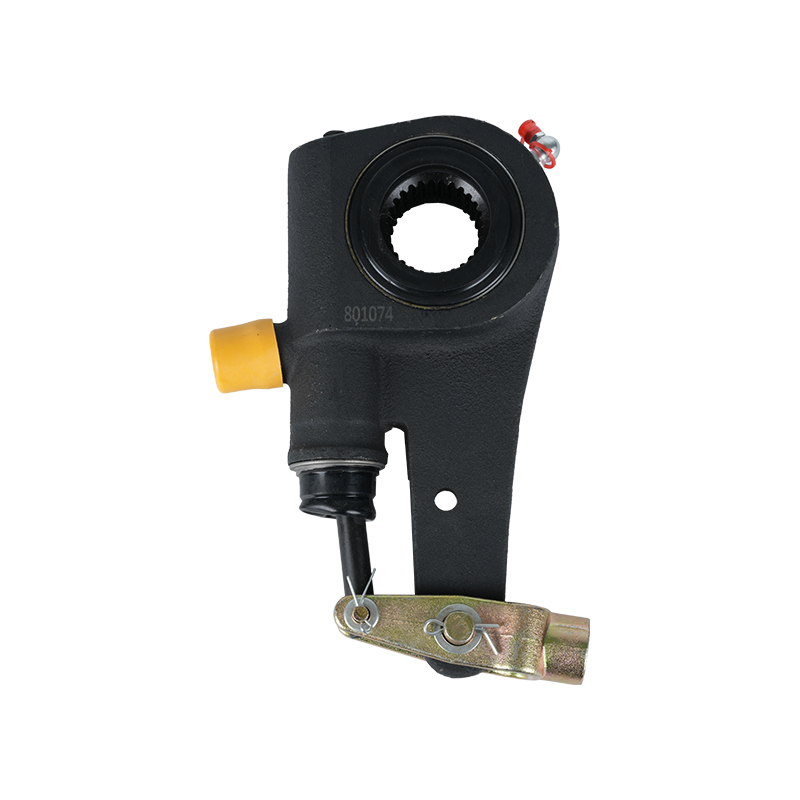
Slack adjusters are a critical component of air brake systems on heavy-duty trucks, trailers, and buses. They serve as the mechanical link between the air brake chamber pushrod and the brake camshaft. When air pressure activates the brake chamber, the pushrod extends and the slack adjuster converts that linear motion into rotational force, which turns the S-cam and pushes the brake shoes against the drum.
As brake linings wear down over time, the distance between the shoes and the drum increases. This is called "slack." If the slack adjuster is not maintaining the correct free stroke, the pushrod has to travel farther before the brakes engage — which increases stopping distance and reduces braking effectiveness. In extreme cases, brakes can fail to engage at all if the pushrod travel exceeds the chamber's stroke limit.
FMCSA regulations (49 CFR Part 393) specify maximum allowed pushrod stroke for each chamber type. For example, a Type 30 brake chamber has a maximum stroke of 2.5 inches. If pushrod travel exceeds these limits, the vehicle is placed out of service immediately during a roadside inspection. This is not a minor infraction — it is a critical brake violation.
Proper slack adjuster function ensures that pushrod travel stays within the manufacturer-specified range — typically between 5/8 inch and 1.5 inches depending on chamber size — keeping the brake system responsive and legal.
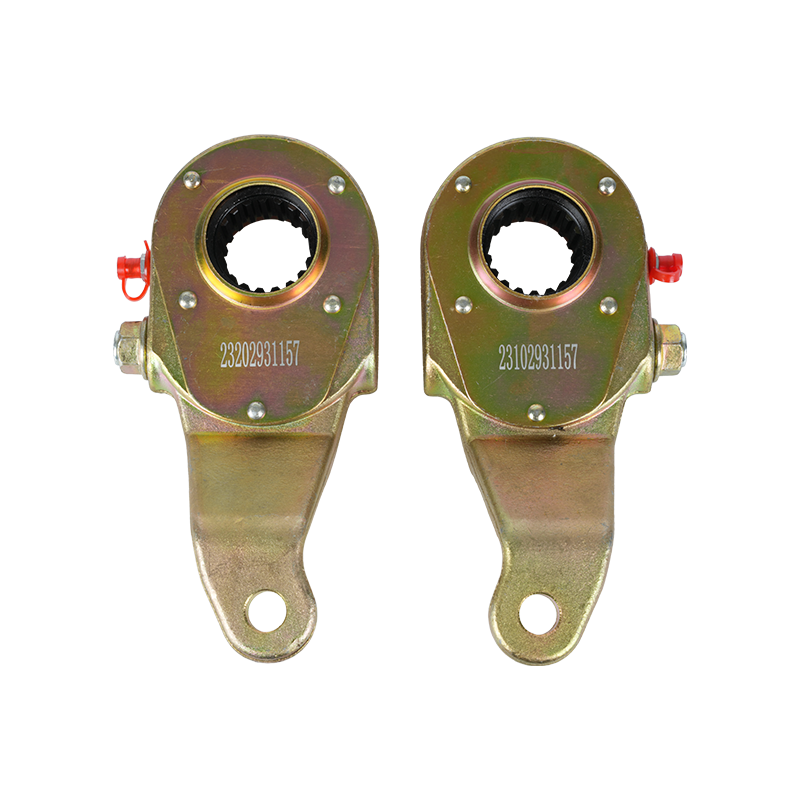
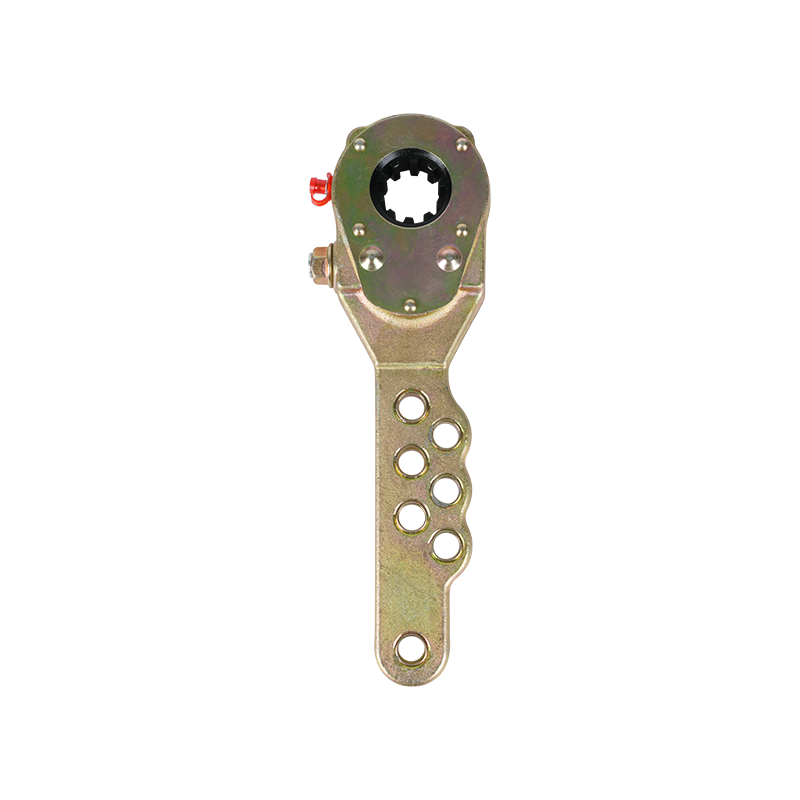
Manual slack adjusters require hands-on adjustment by a qualified technician whenever pushrod stroke exceeds the acceptable range. They do not self-correct. Here is a practical breakdown of when adjustments should happen:
Vocational vehicles — garbage trucks, mixers, dump trucks, and similar equipment operating in stop-and-go conditions — wear brake linings faster than over-the-road trucks. For these vehicles, check stroke at every oil change interval or even more frequently. Concrete mixer operators, for instance, may need to check stroke every 5,000 miles or less depending on route profile.
Long-haul operators running mostly highway miles experience slower lining wear and may comfortably stay on a 20,000–25,000 mile adjustment interval — but inspections must still occur at every PM and every pre-trip.
Pushrod stroke must be measured with the brakes fully released and the vehicle on level ground. Mark the pushrod at the face of the brake chamber with a marker or chalk, then have someone apply 90–100 psi of air pressure while you measure how far the pushrod extends. The distance between the mark and the chamber face is the applied stroke.
Compare your measurement to the FMCSA table for that chamber type. If you are at or beyond 80% of the maximum allowable stroke, adjust immediately — don't wait for the next scheduled interval.
The following table shows the most common brake chamber sizes and their corresponding maximum allowable pushrod stroke per FMCSA regulations. Exceeding these limits constitutes an out-of-service condition.
| Chamber Type | Outside Diameter (in) | Max Stroke (in) | Common Application |
|---|---|---|---|
| Type 6 | 4.5 | 1.25 | Light front axles |
| Type 12 | 5.75 | 1.75 | Medium front axles |
| Type 16 | 6.25 | 1.75 | Front and rear axles |
| Type 20 | 6.75 | 2.00 | Rear drive axles |
| Type 24 | 7.00 | 2.00 | Rear drive axles |
| Type 30 | 8.00 | 2.50 | Heavy rear axles, tandem |
| Type 36 | 8.00 | 3.00 | Heavy-duty drive axles |
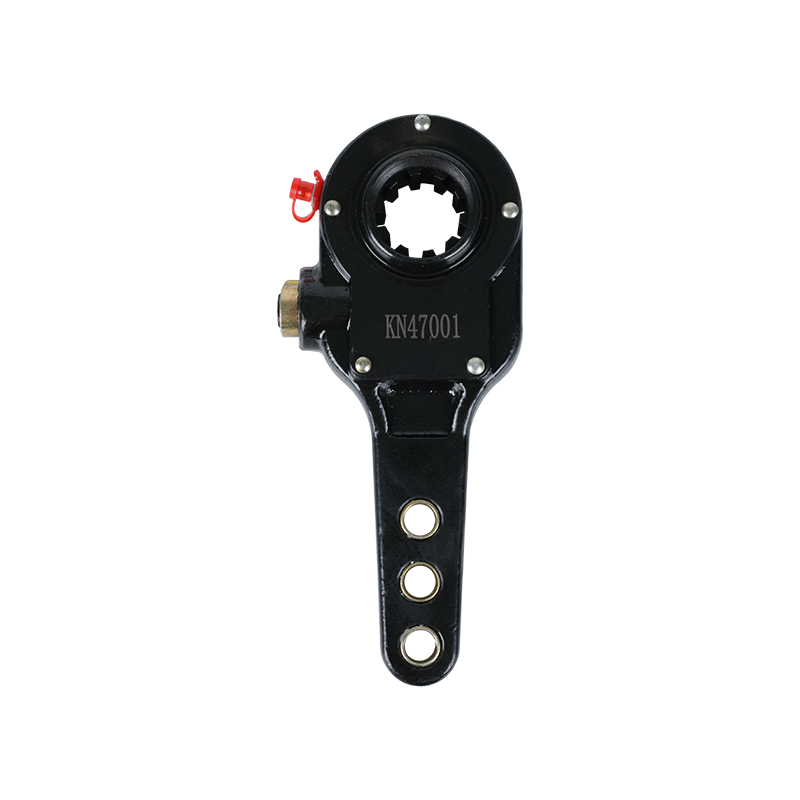
Automatic slack adjusters became mandatory on all new air-braked CMVs in the United States starting in 1994 for tractors and 1995 for trailers. Despite their name, ASAs do not eliminate the need for maintenance — they eliminate the need for routine manual stroke adjustment when functioning correctly.
If you find yourself manually adjusting an automatic slack adjuster repeatedly, replace it — do not keep adjusting it. This is a direct statement from FMCSA guidance and most ASA manufacturers. An ASA that cannot maintain correct stroke on its own is defective. Manually adjusting it masks the problem and gives a false sense of brake performance.
Proper automatic slack adjuster maintenance includes the following tasks performed at each PM interval:
Worn S-cam bushings and brake spiders are responsible for a large proportion of ASA-related brake issues. When the camshaft has excessive lateral movement, the ASA cannot accurately track lining wear and will either over-adjust or under-adjust. Replacing bushings when they show more than 0.030 inches of radial play prevents most chronic ASA problems.
Do not wait for a scheduled interval if any of these warning signs appear. Address them immediately:
Brake dragging is worth additional attention because it is commonly caused by over-adjustment — a mistake that some drivers and even less experienced technicians make when they manually crank a slack adjuster too tight. Over-adjustment holds the brake shoes against the drum even when the brake pedal is released, causing rapid lining wear, drum overheating, tire fires in extreme cases, and premature wheel bearing failure.
Manual slack adjuster adjustment is not complicated, but it must be done precisely. Careless adjustment — particularly over-adjustment — causes brake drag and accelerated wear. Here is the correct procedure:
Never adjust slack adjusters with the brakes applied or the parking brake set. Doing so gives a false reading and will result in over-adjustment when the brake releases. This is one of the most common technician errors in brake adjustment.
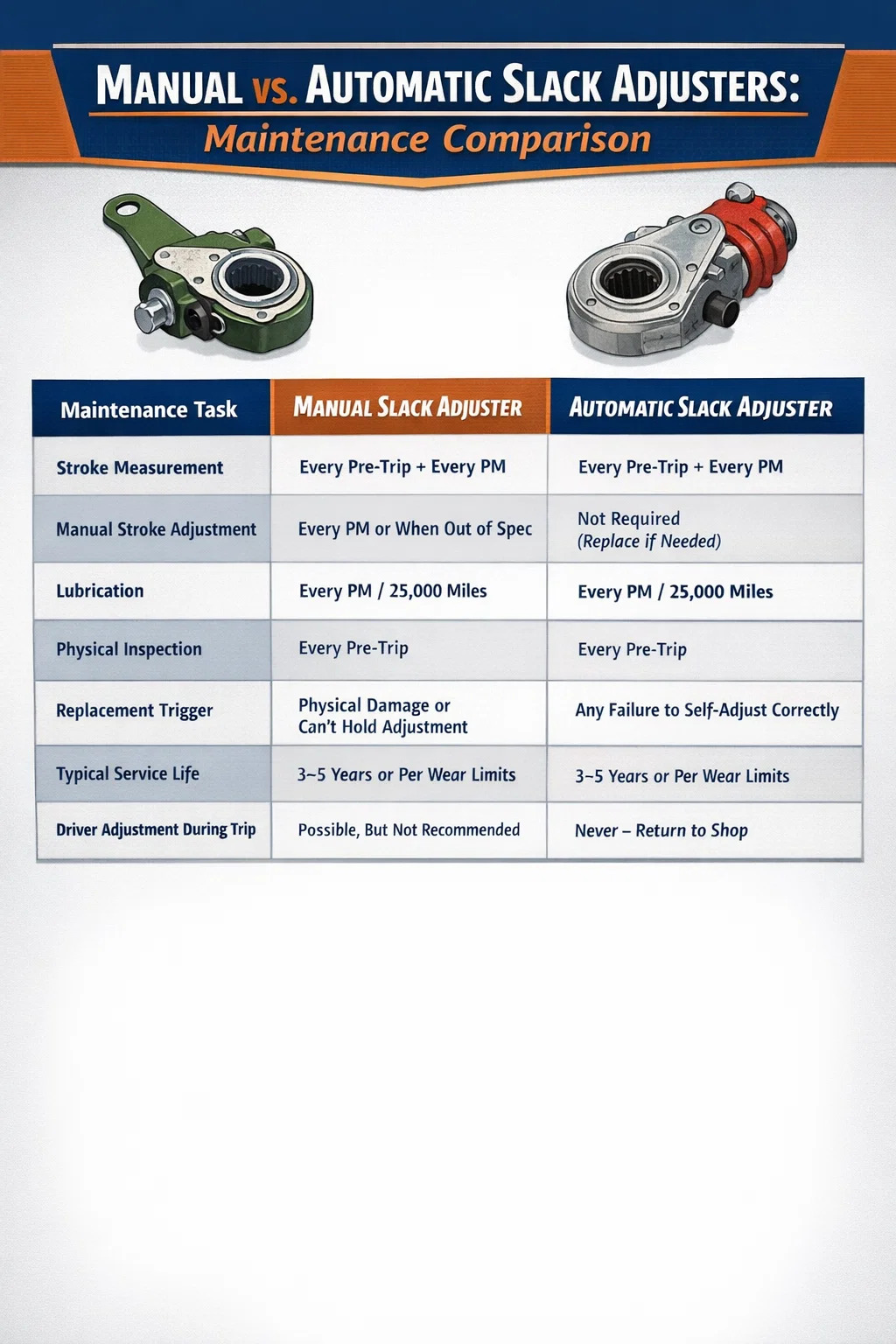
The table below summarizes the key maintenance differences between manual and automatic slack adjusters to help fleet managers and owner-operators build the right PM schedule.
| Maintenance Task | Manual Slack Adjuster | Automatic Slack Adjuster |
|---|---|---|
| Stroke measurement | Every pre-trip + every PM | Every pre-trip + every PM |
| Manual stroke adjustment | Every PM or when out of spec | Not required (replace if needed) |
| Lubrication | Every PM / 25,000 miles | Every PM / 25,000 miles |
| Physical inspection | Every pre-trip | Every pre-trip |
| Replacement trigger | Physical damage or inability to hold adjustment | Any failure to self-adjust correctly |
| Typical service life | 3–5 years or per wear limits | 3–5 years or per wear limits |
| Driver adjustment during trip | Possible but not recommended without training | Never — return to shop |
The 10,000–25,000 mile guideline assumes average operating conditions. Real-world fleets often face conditions that demand shorter intervals. Understanding these factors helps set a PM schedule that actually matches how the vehicle is used.
City delivery routes, refuse collection trucks, and transit buses can apply brakes hundreds of times per day. Lining wear accumulates far faster than on a highway route covering the same mileage. For vehicles in this category, check slack adjuster stroke every 5,000 miles or every 30 days — whichever arrives first.
Descending long grades requires sustained braking that generates significant heat and lining wear. Trucks running Appalachian or Rocky Mountain routes will consume linings faster than flatland operations. Inspect slack adjusters after any significant grade descent and shorten PM intervals to 10,000–15,000 miles.
Winter road salt, construction site mud, and sand exposure accelerate corrosion on slack adjuster bodies, clevis pins, and adjustment mechanisms. In these environments, inspect and lubricate slack adjusters more frequently — monthly at minimum — and replace components at the first sign of seized or corroded parts rather than waiting for failure.
Heavier loads mean more braking force required per stop, translating directly to faster lining wear. Vehicles consistently operating at or near gross vehicle weight rating (GVWR) should be on a tighter PM schedule than those running partial loads.
Most slack adjuster-related brake failures are preventable. The same mistakes appear repeatedly across maintenance records and accident investigations.
FMCSA regulations require CMV drivers to inspect brake components before every trip. For slack adjusters, the pre-trip inspection is not a full mechanical check — it is a visual and functional assessment that takes a few minutes per axle.
Drivers are not expected to measure pushrod stroke with gauges daily, but they are responsible for identifying obvious problems. The driver vehicle inspection report (DVIR) must document any defects found. Here is what to look for during a pre-trip:
Drivers with the skill to check pushrod stroke using a ruler or tape measure should do so when they suspect a problem. Any measurement at or beyond the FMCSA limit means the vehicle does not move until corrected. Driving with out-of-spec stroke is a federal violation and a CSA (Compliance, Safety, Accountability) point that stays on the carrier's safety record for 24 months.
Adjustment and maintenance extend service life, but slack adjusters do wear out. Knowing when to replace rather than repair prevents comebacks and keeps the brake system reliable.
Replace slack adjusters when any of the following conditions exist:
Always replace slack adjusters in axle pairs. Replacing only one side creates an imbalance in brake timing and force that is just as problematic as misadjustment. The cost of a second unit is insignificant compared to the risk of uneven braking on a loaded truck.
When replacing an ASA, verify that the replacement unit is the correct effective length for that axle position. Slack adjuster effective length — the distance from the camshaft centerline to the clevis pin centerline — directly affects mechanical advantage and brake torque output. Using the wrong length ASA results in either insufficient braking force or excessive pushrod stroke. Most axle positions use 5.5-inch or 6-inch effective length units, but always verify against the axle manufacturer's specification.
For fleet managers, building slack adjuster checks into a structured PM program prevents the reactive, expensive brake work that results from neglect. A tiered inspection approach works well for most operations:
Visual check of slack adjuster condition, pushrod and clevis integrity, and a basic brake function test. Documented on the DVIR. This takes under five minutes per vehicle and catches obvious failures before the truck leaves the yard.
Full pushrod stroke measurement on all axle positions, manual adjustment of any positions out of spec (for manual ASAs), lubrication of all slack adjuster grease fittings, and inspection of clevis pins, camshaft bushings, and brake spider condition. This is the core brake PM event.
Full brake system teardown and inspection including drum measurement (check against discard thickness specs), lining thickness and condition, S-cam bushing replacement if play exceeds tolerance, spring condition, and slack adjuster replacement if approaching end of service life. This is the comprehensive brake overhaul interval.
Documenting every inspection and adjustment in a maintenance management system (MMS) creates a traceable record that helps identify patterns — if a particular axle position consistently goes out of adjustment faster than others, that is a signal to investigate the underlying cause rather than just keep adjusting.
Fleets that implement structured brake PM programs consistently see brake-related out-of-service rates drop by 30–50% compared to reactive maintenance approaches. The labor and downtime savings from prevention dwarf the cost of regular inspections, particularly when roadside out-of-service events and the associated CSA violations are factored in.


 English
 中文简体
中文简体 русский
 عربى
عربى