


 (+86)-137 5851 1881
(+86)-137 5851 1881
(+86)-137 5851 1881



Content
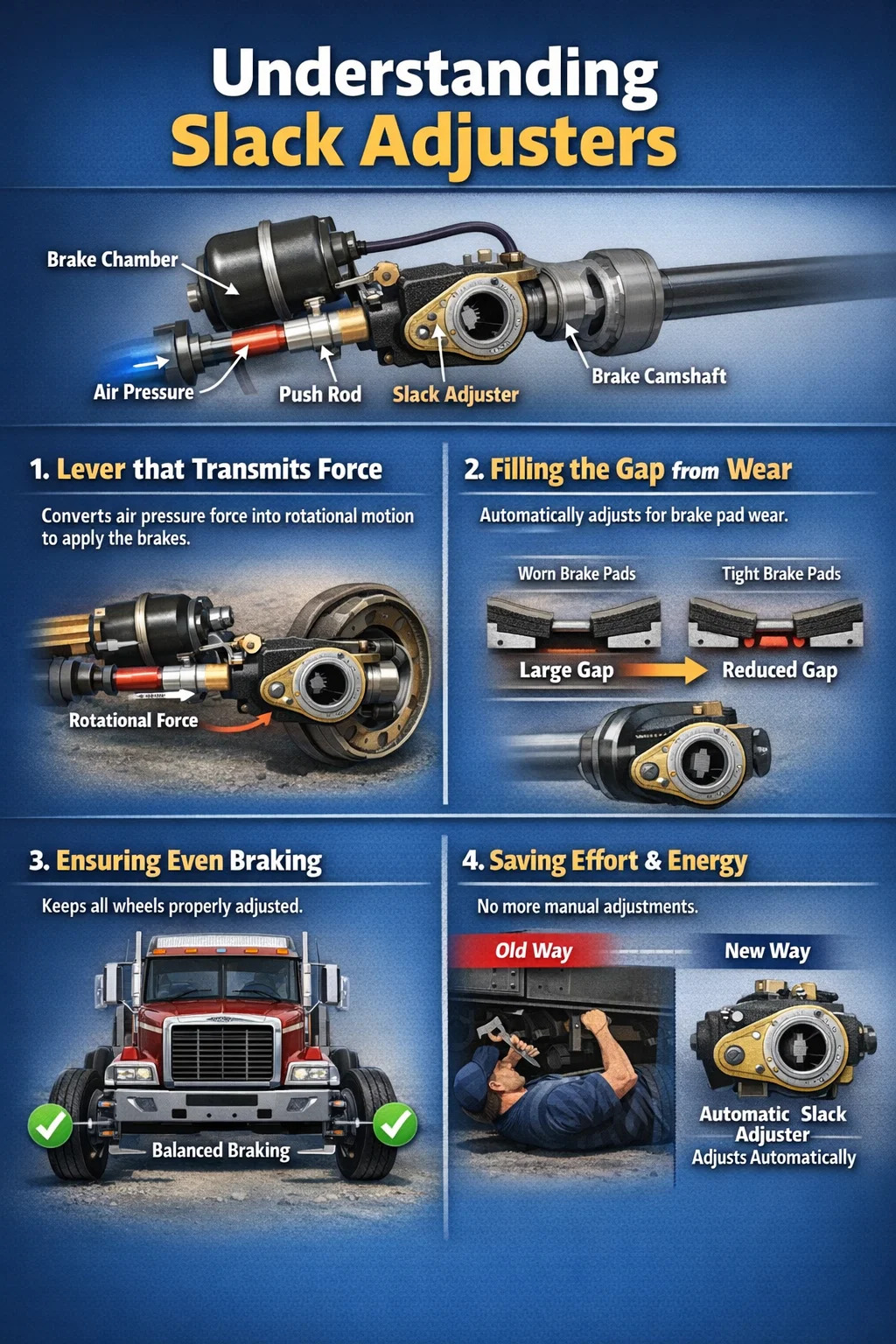
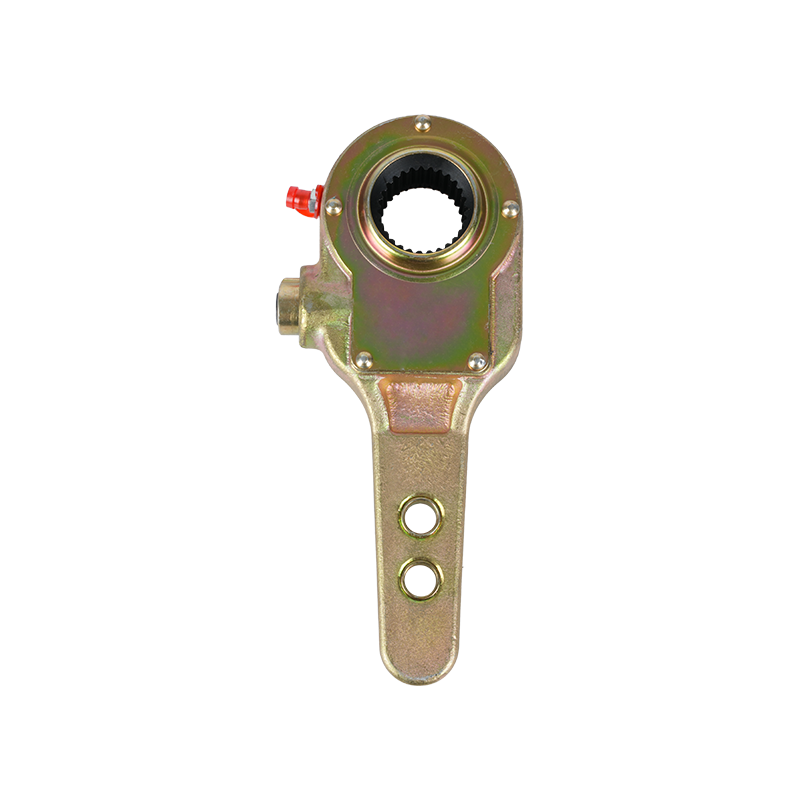
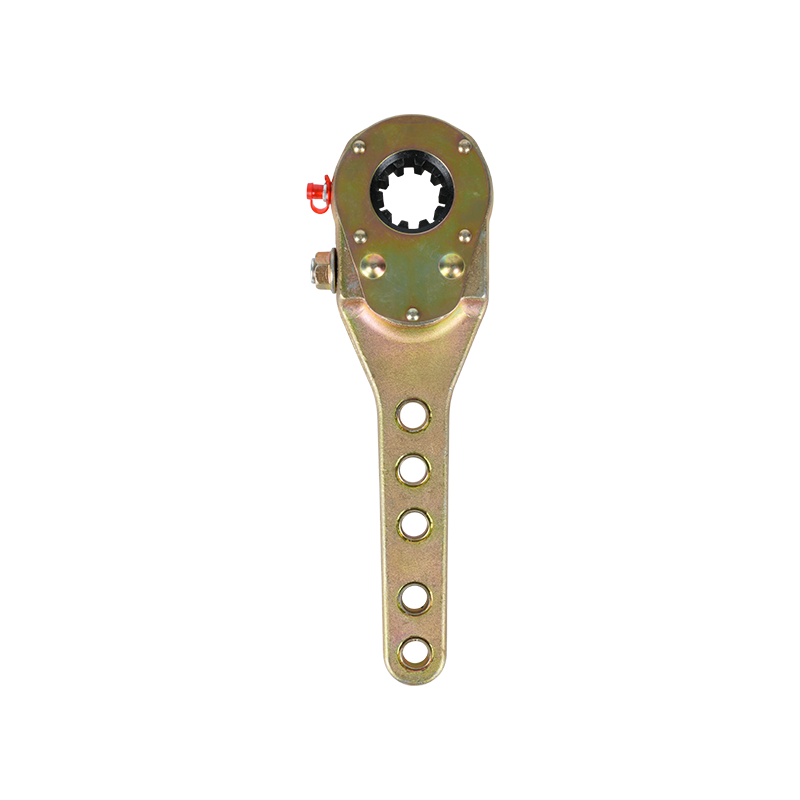
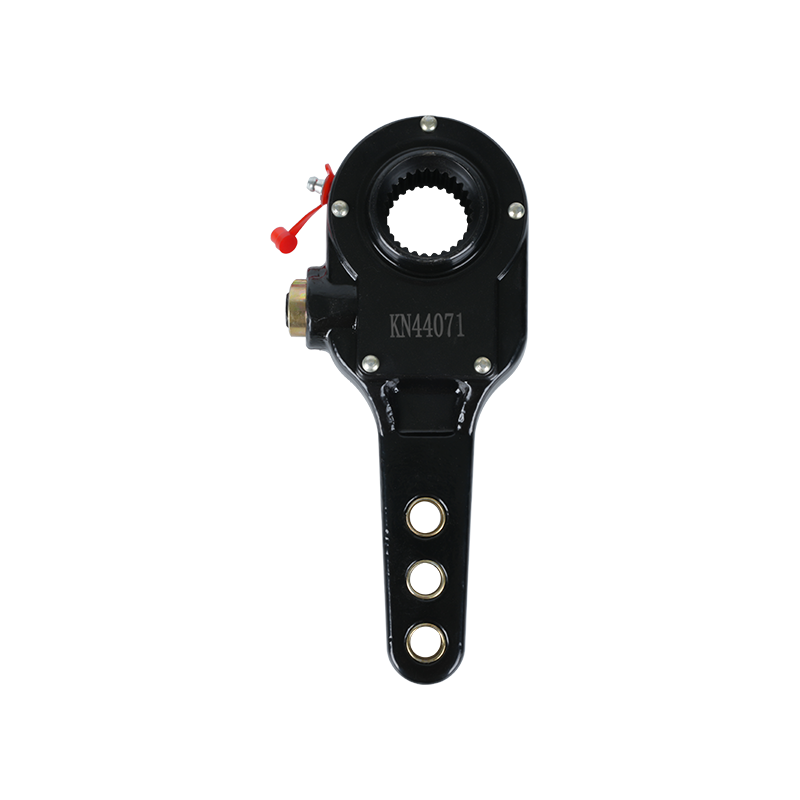
Slack adjusters are like a "translator" and "automatic manager" in the braking system of large trucks and buses. They are located between the brake chamber and the brake shaft.
Without this small component, it would be very difficult for the vehicle to stop safely. Here are some of its core functions:
When you press the brake pedal, the brake chamber releases a powerful burst of air pressure, pushing a metal rod.
The first job of the slack adjuster is to receive this force.
Like a lever, it converts the linear force from the air chamber into rotational force, driving the brake camshaft to rotate.
This rotation causes the brake shoes inside the wheel to spread outwards, pressing tightly against the brake drum, thus stopping the vehicle.
The word "slack" means looseness or gap.
Every time the brakes are applied, the brake pads wear down a little. Over time, the distance between the brake pads and the brake drum increases.
Without slack adjusters, due to the large gap, the air chamber push rod might have to travel a long distance before contacting the brake drum after you press the brake pedal. This would lead to "soft" brakes or slow response.
It fills this extra gap, ensuring that the brake pads are always in a "ready" state.
Large vehicles usually have many wheels.
If the brakes on the left wheels are very tight and those on the right are loose, the front of the vehicle will suddenly veer to one side when braking, which is very dangerous.
Slack adjusters (especially automatic ones) ensure that the brake clearance of each wheel is approximately the same.
This allows four or more wheels to work together simultaneously, allowing the entire vehicle to stop smoothly and evenly.
In the past, experienced drivers had to frequently crawl under the vehicle and manually adjust these adjusters with a wrench to ensure the brakes worked properly. Modern automatic slack adjusters are much more sophisticated. They can sense if the brake clearance is too large during normal braking and automatically adjust it accordingly.
This not only saves drivers the trouble of crawling under the vehicle, but more importantly, it significantly improves driving safety.


 English
 中文简体
中文简体 русский
 عربى
عربى